

Penguin Publishing Group
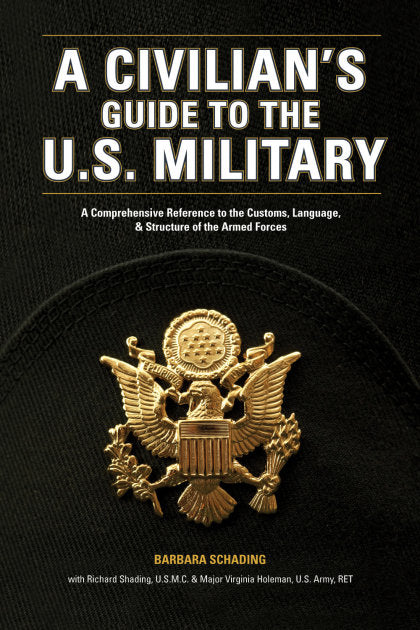
A Civilian's Guide to the U.S. Military
A Civilian's Guide to the U.S. Military
Couldn't load pickup availability
Collapsible content
ABOUT
Does a corporal have to salute a lieutenant or is it the other way around? What are forward-deployed units? Is an "armored cow" a type of tank or something soldiers eat? Are Polaris missiles dropped from the air or launched from a submarine? If someone calls you a "Cat 4" should you be honored or offended?
Do you feel lost when it comes to all things military? Sure, you hear things on the news and maybe you know someone who is in the military, but you probably have a hard time fully grasping the acronyms, equipment, and protocol they discuss. That's where A Civilian's Guide to the U.S. Military can help. Author Barbara Schading decodes all things military for you. She discusses each branchArmy, Navy, Marines, Air Force, and the Coast Guardin simple terms you can understand. You'll get the background information, an easy-to-read chart showing rank and insignia, and an explanation of the organization of each branch.
In addition, the book has extensive glossaries that cover terms, acronyms, slang, and equipment. You'll find an entire chapter that covers special operations forces like the Green Berets, Force Recons, Army Rangers, and more. You'll learn about their specific training, missions, and history. The book also covers other important aspects of the military like:
• flag and saluting etiquette
• military funerals
• the Tombs of the Unknown
• the American Legion, USO, Veterans of Foreign Wars, and other groups
• military law
• military academies
• medals and decorations
• official military music
• an explanation of the Geneva Convention
• and a list of resources to help you find more information
So the next time you read the paper or talk with a new recruit, you don't have to feel lost. Become a knowledgeable civilian with the help of A Civilian's Guide to the U.S. Military.
STANDARD, PRIMARY, DM AND VARIANT COVERS
Standard and Primary covers are widely available through general retailers. They often have higher print runs and can be cheaper, especially during sales.
In contrast, Direct Market (DM) and variant covers are primarily sold in comic shops. DM editions tend to have more limited availability and may be more valuable to collectors.
The main differences lie in artwork style, availability, price, and collector appeal. Ultimately, the choice between standard and variant covers depends on personal preference, budget, and individual collecting goals.
PRODUCT TYPES
Comic book enthusiasts have various formats to choose from when collecting their favorite stories.
Here's a brief overview of the main types:
Omnibus
- Large, hardcover collections
- Usually contain complete runs or extensive story arcs
- Typically 800-1000+ pages
- Higher price point, often €100-€150
Oversized Hardcover (OHC)
- Similar dimensions to omnibus, but thinner
- Collect shorter runs or story arcs
- Usually 300-600 pages
- Priced between €30-€50
Hardcover (HC)
- Standard-sized hardcover books
- Collect 6-12 issues typically
- Similar dimensions to single issues, but with a hard cover
- Priced around €25-€35
Trade Paperback (TP)
- Softcover collections
- Standard comic book size
- Usually collect 4-6 issues
- Most affordable option, typically €15-€25
Other Formats
- Absolute Editions: Oversized, deluxe hardcovers (mainly DC Comics)
- Compendiums: Massive paperback collections
- Graphic Novels (OGN/GN): Original stories not previously released as single issues
The choice between these formats often depends on personal preference, budget, and collecting goals. Omnibus and OHC editions offer larger artwork and more content but at a higher price, while TPs provide a more affordable way to collect complete story arcs