

Beacon Press
A Deaf Artist in Early America
A Deaf Artist in Early America
Couldn't load pickup availability
Collapsible content
ABOUT
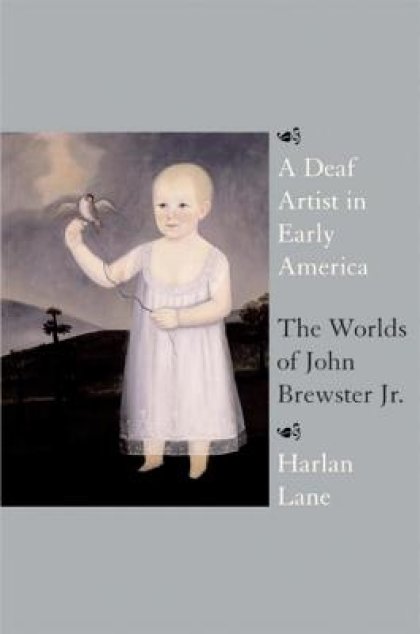
Brewster's portraits have sold astonishingly well at auction, and his work is featured in the collections of prestigious museums, yet curiously little has been written about the life of this deaf artist. Traveling the New England coast to paint the portraits of the merchant class that arose after the Revolution, he lived precisely when a Deaf-World-with its own language, social institutions, and culture-was forming. Harlan Lane, award-winning historian of the Deaf, argues that deaf people are often visually gifted, and that Brewster, as a deaf artist, is part of a long and continuing distinguished tradition.
Lane's unprecedented biography both vividly and comprehensively explores Brewster's worlds: he was a seventh-generation descendant of William Brewster, who led the Pilgrims on the Mayflower voyage; he was a member of the Federalist elite; a Deaf man; and, finally, an artist.
In 1817, at the age of fifty-one, Brewster attended the first school for the Deaf in America, the Connecticut Asylum for the Education and Instruction of Deaf & Dumb Persons. It's extraordinary to imagine that this was the first time he experienced fluent conversation and real social and intellectual exchange. Yet, as Lane notes, Brewster's ambivalence about this minority reflects the difficult choices confronting many Deaf people, then and now.
Including little-known information on the French roots of the American Deaf-World; the Deaf communities of Martha's Vineyard, Maine, and New Hampshire in the nineteenth century; and on contemporary Deaf art, A Deaf Artist in Early America provides a multifaceted glimpse of Brewster, New England history, and the distinctive culture, language, and social institutions of the Deaf in America.
PRE-ORDER
Secure the best deal by acting fast! Our Pre-Order promo offers unbeatable prices on must-have items. Be quick to lock in the lowest cost before the promo ends.
The best part? You won't be charged until your item is ready to ship. This means you can reserve your product at the best price without immediate payment. Whether you're first in line or just ahead of the crowd, you're making a smart choice. Reserve your item now and enjoy the benefits of being an early buyer, with the added flexibility of delayed payment!
STANDARD, PRIMARY, DM AND VARIANT COVERS
Standard and Primary covers are widely available through general retailers. They often have higher print runs and can be cheaper, especially during sales.
In contrast, Direct Market (DM) and variant covers are primarily sold in comic shops. DM editions tend to have more limited availability and may be more valuable to collectors.
The main differences lie in artwork style, availability, price, and collector appeal. Ultimately, the choice between standard and variant covers depends on personal preference, budget, and individual collecting goals.
PRODUCT TYPES
Comic book enthusiasts have various formats to choose from when collecting their favorite stories.
Here's a brief overview of the main types:
Omnibus
- Large, hardcover collections
- Usually contain complete runs or extensive story arcs
- Typically 800-1000+ pages
- Higher price point, often €100-€150
Oversized Hardcover (OHC)
- Similar dimensions to omnibus, but thinner
- Collect shorter runs or story arcs
- Usually 300-600 pages
- Priced between €30-€50
Hardcover (HC)
- Standard-sized hardcover books
- Collect 6-12 issues typically
- Similar dimensions to single issues, but with a hard cover
- Priced around €25-€35
Trade Paperback (TP)
- Softcover collections
- Standard comic book size
- Usually collect 4-6 issues
- Most affordable option, typically €15-€25
Other Formats
- Absolute Editions: Oversized, deluxe hardcovers (mainly DC Comics)
- Compendiums: Massive paperback collections
- Graphic Novels (OGN/GN): Original stories not previously released as single issues
The choice between these formats often depends on personal preference, budget, and collecting goals. Omnibus and OHC editions offer larger artwork and more content but at a higher price, while TPs provide a more affordable way to collect complete story arcs