

Harmony/Rodale/Convergent
A Feather and a Fork
A Feather and a Fork
Couldn't load pickup availability
Collapsible content
ABOUT
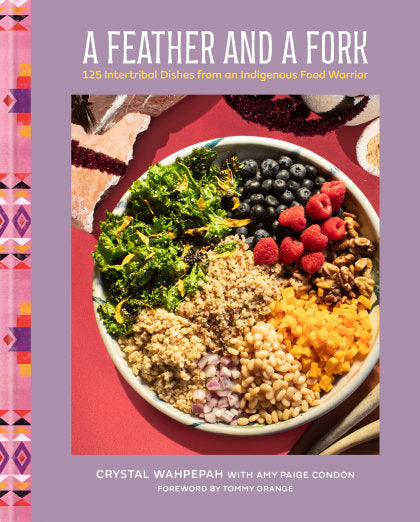
Chef Crystal Wahpepah has used her growing platform to tell the little-known history of Oakland's tight-knit Native American communities, which were relocated from reservations across the country to the San Francisco Bay area in the 1950s. Crystal's powerful message to reconnect to our foodways and transform generational trauma into strength as well as her healing dishes have been seen on Food Network’s Chopped and Beating Bobby Flay.
The rise of corporate agriculture around the world relies on singular and often genetically modified monocultures plus lots of chemicals and soil additives to produce massive crop yields. And while this approach may economically make sense on paper to feed multitudes at the lowest price point possible, it has harmed our physical health, emotional well-being, and the very creation that supports life. This truth applies not just to Indigenous people, who have been harmed by the federal commodified foods program, but to all of us who have come to rely on cheap and easy processed foods to feed our families. We no longer get the nutrients we need from our food and spend lots of money on supplementing our diets. We develop chronic diseases that can be avoided and even cured through eating habits.
Eat with the seasons, cure your disconnection with the land, and cook colorful, delicious food rooted in the oldest traditions including:
- Three Sisters Veggie Bowls
- Sweet Blue Cornbread with Huckleberry Compote
- Indigenous Popcorn Balls with Edible Flowers
- Strawberry-Sumac Salad with Maple-Sage Vinaigrette
- Bison Roast with Chokeberry Rub
- Smoked Salmon Dip with Red Chilies and Chips
- Acorn Muffins, and much more
A Feather and a Fork includes 125 recipes developed in collaboration with ethnobotanist and food sovereignty advocate Linda Black Elk to explore the environmental, spiritual, physical, and social benefits of each dish as well as raise awareness of and support for indigenous food producers who are preserving heirloom foods and traditions.
STANDARD, PRIMARY, DM AND VARIANT COVERS
Standard and Primary covers are widely available through general retailers. They often have higher print runs and can be cheaper, especially during sales.
In contrast, Direct Market (DM) and variant covers are primarily sold in comic shops. DM editions tend to have more limited availability and may be more valuable to collectors.
The main differences lie in artwork style, availability, price, and collector appeal. Ultimately, the choice between standard and variant covers depends on personal preference, budget, and individual collecting goals.
PRODUCT TYPES
Comic book enthusiasts have various formats to choose from when collecting their favorite stories.
Here's a brief overview of the main types:
Omnibus
- Large, hardcover collections
- Usually contain complete runs or extensive story arcs
- Typically 800-1000+ pages
- Higher price point, often €100-€150
Oversized Hardcover (OHC)
- Similar dimensions to omnibus, but thinner
- Collect shorter runs or story arcs
- Usually 300-600 pages
- Priced between €30-€50
Hardcover (HC)
- Standard-sized hardcover books
- Collect 6-12 issues typically
- Similar dimensions to single issues, but with a hard cover
- Priced around €25-€35
Trade Paperback (TP)
- Softcover collections
- Standard comic book size
- Usually collect 4-6 issues
- Most affordable option, typically €15-€25
Other Formats
- Absolute Editions: Oversized, deluxe hardcovers (mainly DC Comics)
- Compendiums: Massive paperback collections
- Graphic Novels (OGN/GN): Original stories not previously released as single issues
The choice between these formats often depends on personal preference, budget, and collecting goals. Omnibus and OHC editions offer larger artwork and more content but at a higher price, while TPs provide a more affordable way to collect complete story arcs