

Beacon Press
A Surgeon in the Village
A Surgeon in the Village
Couldn't load pickup availability
Collapsible content
ABOUT
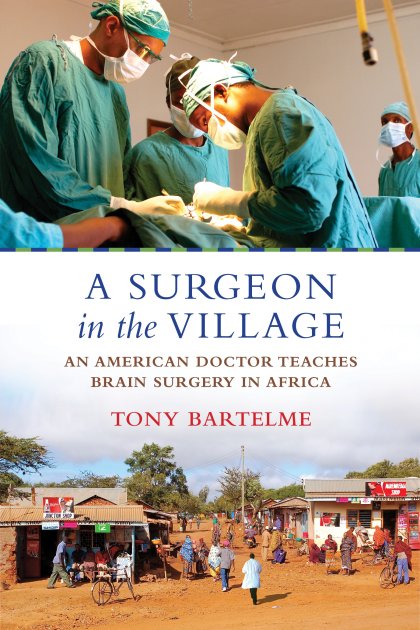
Dr. Dilan Ellegala arrives in Tanzania, shocked to find the entire country has just three brain surgeons for its population of forty-two million. Haydom Lutheran Hospital lacks even the most basic surgical tools, not even a saw to open a patient’s skull. Here, people with head injuries or brain tumors heal on their own or die. When confronted with a villager suffering from a severe head trauma, Dilan buys a tree saw from a farmer, sterilizes it, and then uses it to save the man’s life.
Yet Dilan realizes that there are far too many neurosurgery patients for one person to save, and of course he will soon be leaving Tanzania. He needs to teach someone his skills. He identifies a potential student in Emmanuel Mayegga, a stubborn assistant medical officer who grew up in a mud hut. Though Mayegga has no medical degree, Dilan sees that Mayegga has the dexterity, intelligence, and determination to do brain surgery. Over six months, he teaches Mayegga how to remove tumors and treat hydrocephalus. And then, perhaps more important, Dilan teaches Mayegga how to pass on his newfound skills. Mayegga teaches a second Tanzanian, who teaches a third. It’s a case of teach-a-man-to-fish meets brain surgery.
As he guides these Tanzanians to do things they never thought possible, Dilan challenges the Western medical establishment to do more than send vacationing doctors on short-term medical missions. He discovers solutions that could transform health care for two billion people across the world.
A Surgeon in the Village is the incredible and riveting account of one man’s push to “train-forward”—to change our approach to aid and medical training before more lives are needlessly lost. His story is a testament to the transformational power of teaching and the ever-present potential for change. As many as seventeen million people die every year because of a shortage of surgeons, more than die from AIDS, malaria, and tuberculosis combined. Dilan Ellegala and other visionaries are boldly proposing ways of saving lives.
STANDARD, PRIMARY, DM AND VARIANT COVERS
Standard and Primary covers are widely available through general retailers. They often have higher print runs and can be cheaper, especially during sales.
In contrast, Direct Market (DM) and variant covers are primarily sold in comic shops. DM editions tend to have more limited availability and may be more valuable to collectors.
The main differences lie in artwork style, availability, price, and collector appeal. Ultimately, the choice between standard and variant covers depends on personal preference, budget, and individual collecting goals.
PRODUCT TYPES
Comic book enthusiasts have various formats to choose from when collecting their favorite stories.
Here's a brief overview of the main types:
Omnibus
- Large, hardcover collections
- Usually contain complete runs or extensive story arcs
- Typically 800-1000+ pages
- Higher price point, often €100-€150
Oversized Hardcover (OHC)
- Similar dimensions to omnibus, but thinner
- Collect shorter runs or story arcs
- Usually 300-600 pages
- Priced between €30-€50
Hardcover (HC)
- Standard-sized hardcover books
- Collect 6-12 issues typically
- Similar dimensions to single issues, but with a hard cover
- Priced around €25-€35
Trade Paperback (TP)
- Softcover collections
- Standard comic book size
- Usually collect 4-6 issues
- Most affordable option, typically €15-€25
Other Formats
- Absolute Editions: Oversized, deluxe hardcovers (mainly DC Comics)
- Compendiums: Massive paperback collections
- Graphic Novels (OGN/GN): Original stories not previously released as single issues
The choice between these formats often depends on personal preference, budget, and collecting goals. Omnibus and OHC editions offer larger artwork and more content but at a higher price, while TPs provide a more affordable way to collect complete story arcs