

Penguin Publishing Group
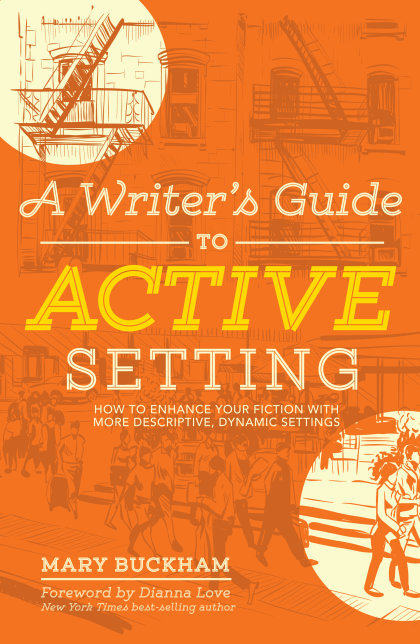
A Writer's Guide to Active Setting
A Writer's Guide to Active Setting
Couldn't load pickup availability
Collapsible content
ABOUT
Setting is one of the most underutilized and misunderstood elements of the writing craft. And when writers do focus on setting, they often pull readers out of the narrative and jolt their attention from the action on the page.
A Writer's Guide to Active Setting will show you how to create vivid, detailed settings that bring your story to life. You'll learn how to deepen character development, anchor readers to a specific time and place, reveal backstory without slowing things down, elevate action sequences, and more.
Drawing upon examples from authors writing across a variety of genres, Mary Buckham will illustrate exactly how the proper use of setting can dramatically improve your story. You'll learn what's effective about each passage and how you can use those techniques to make your story shine.
"Takes an all too often overlooked technique, and elevates it to a next-level game changer for powerful fiction." --Cathy Yardley, author of Rock Your Plot
"A powerful combination of fresh insights, practical examples, and how-to advice on the often overlooked but critical element of setting...written in a quick-to-read and easy-to-understand style, and packed with useful application exercises." --Kelly L. Stone, author of Thinking Write: The Secret to Freeing Your Creative Mind
"If you're a writer, then Mary Buckham's book is a must-have tool for your writer's toolkit. Creating settings that are rich and believable is not an easy task, but with this book, I found that each chapter gave me great tips that I could immediately implement in my manuscript." --Laurie G. Adams, author of Finding Atticus
STANDARD, PRIMARY, DM AND VARIANT COVERS
Standard and Primary covers are widely available through general retailers. They often have higher print runs and can be cheaper, especially during sales.
In contrast, Direct Market (DM) and variant covers are primarily sold in comic shops. DM editions tend to have more limited availability and may be more valuable to collectors.
The main differences lie in artwork style, availability, price, and collector appeal. Ultimately, the choice between standard and variant covers depends on personal preference, budget, and individual collecting goals.
PRODUCT TYPES
Comic book enthusiasts have various formats to choose from when collecting their favorite stories.
Here's a brief overview of the main types:
Omnibus
- Large, hardcover collections
- Usually contain complete runs or extensive story arcs
- Typically 800-1000+ pages
- Higher price point, often €100-€150
Oversized Hardcover (OHC)
- Similar dimensions to omnibus, but thinner
- Collect shorter runs or story arcs
- Usually 300-600 pages
- Priced between €30-€50
Hardcover (HC)
- Standard-sized hardcover books
- Collect 6-12 issues typically
- Similar dimensions to single issues, but with a hard cover
- Priced around €25-€35
Trade Paperback (TP)
- Softcover collections
- Standard comic book size
- Usually collect 4-6 issues
- Most affordable option, typically €15-€25
Other Formats
- Absolute Editions: Oversized, deluxe hardcovers (mainly DC Comics)
- Compendiums: Massive paperback collections
- Graphic Novels (OGN/GN): Original stories not previously released as single issues
The choice between these formats often depends on personal preference, budget, and collecting goals. Omnibus and OHC editions offer larger artwork and more content but at a higher price, while TPs provide a more affordable way to collect complete story arcs