

Knopf Doubleday Publishing Group
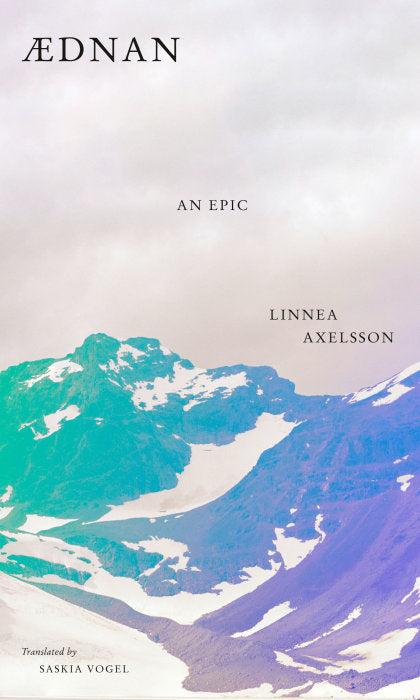
Aednan
Aednan
Couldn't load pickup availability
Collapsible content
ABOUT
“Crystalline prose that reads like poetry and myth at once. There are intricate layers of beauty and meaning here in sparse clusters across a vast new landscape as I’ve never read before. The music of this book is old, and it is new, and it is old.”—Tommy Orange, bestselling author of There, There and Wandering Stars
In Northern Sámi, the word Ædnan means the land, the earth, and my mother. These are all crucial forces within the lives of the Indigenous families that animate this groundbreaking book: an astonishing verse novel that chronicles a hundred years of change: a book that will one day stand alongside Halldór Laxness’s Independent People and Sigrid Undset’s Kristin Lavransdatter as an essential Scandinavian epic.
The tale begins in the 1910s, as Ristin and her family migrate their herd of reindeer to summer grounds. Along the way, forced to separate due to the newly formed border between Sweden and Norway, Ristin loses one of her sons in the aftermath of an accident, a grief that will ripple across the rest of the book. In the wake of this tragedy, Ristin struggles to manage what’s left of her family and her community.
In the 1970s, Lise, as part of a new generation of Sámi grappling with questions of identity and inheritance, reflects on her traumatic childhood, when she was forced to leave her parents and was placed in a Nomad School to be stripped of the language of her ancestors. Finally, in the 2010s we meet Lise’s daughter, Sandra, an embodiment of Indigenous resilience, an activist fighting for reparations in a highly publicized land rights trial, in a time when the Sámi language is all but lost.
Weaving together the voices of half a dozen characters, from elders to young people unsure of their heritage, Axelsson has created a moving family saga around the consequences of colonial settlement. Ædnan is a powerful reminder of how durable language can be, even when it is borrowed, especially when it has to hold what no longer remains. “I was the weight / in the stone you brought / back from the coast // to place on / my grave,” one character says to another from beyond the grave. “And I flew above / the boat calling / to you all: // There will be rain / there will be rain.”
STANDARD, PRIMARY, DM AND VARIANT COVERS
Standard and Primary covers are widely available through general retailers. They often have higher print runs and can be cheaper, especially during sales.
In contrast, Direct Market (DM) and variant covers are primarily sold in comic shops. DM editions tend to have more limited availability and may be more valuable to collectors.
The main differences lie in artwork style, availability, price, and collector appeal. Ultimately, the choice between standard and variant covers depends on personal preference, budget, and individual collecting goals.
PRODUCT TYPES
Comic book enthusiasts have various formats to choose from when collecting their favorite stories.
Here's a brief overview of the main types:
Omnibus
- Large, hardcover collections
- Usually contain complete runs or extensive story arcs
- Typically 800-1000+ pages
- Higher price point, often €100-€150
Oversized Hardcover (OHC)
- Similar dimensions to omnibus, but thinner
- Collect shorter runs or story arcs
- Usually 300-600 pages
- Priced between €30-€50
Hardcover (HC)
- Standard-sized hardcover books
- Collect 6-12 issues typically
- Similar dimensions to single issues, but with a hard cover
- Priced around €25-€35
Trade Paperback (TP)
- Softcover collections
- Standard comic book size
- Usually collect 4-6 issues
- Most affordable option, typically €15-€25
Other Formats
- Absolute Editions: Oversized, deluxe hardcovers (mainly DC Comics)
- Compendiums: Massive paperback collections
- Graphic Novels (OGN/GN): Original stories not previously released as single issues
The choice between these formats often depends on personal preference, budget, and collecting goals. Omnibus and OHC editions offer larger artwork and more content but at a higher price, while TPs provide a more affordable way to collect complete story arcs