

Crown
All the Lives We Ever Lived
All the Lives We Ever Lived
Couldn't load pickup availability
Collapsible content
ABOUT
“Transcendent.”—The Washington Post • “You’d be hard put to find a more moving appreciation of Woolf’s work.”—The Wall Street Journal
NAMED ONE OF THE BEST BOOKS OF THE YEAR BY TOWN & COUNTRY
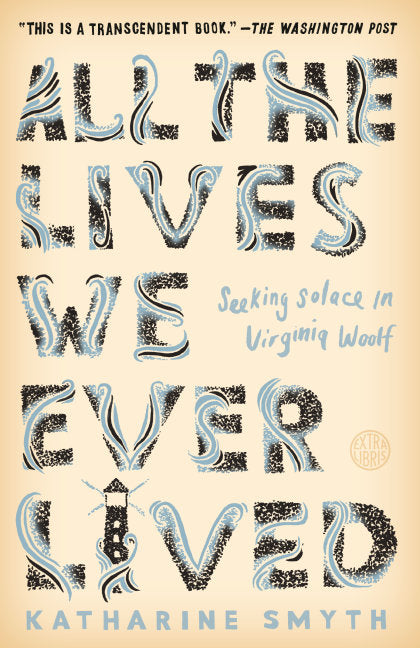
Katharine Smyth was a student at Oxford when she first read Virginia Woolf’s modernist masterpiece To the Lighthouse in the comfort of an English sitting room, and in the companionable silence she shared with her father. After his death—a calamity that claimed her favorite person—she returned to that beloved novel as a way of wrestling with his memory and understanding her own grief.
Smyth’s story moves between the New England of her childhood and Woolf’s Cornish shores and Bloomsbury squares, exploring universal questions about family, loss, and homecoming. Through her inventive, highly personal reading of To the Lighthouse, and her artful adaptation of its groundbreaking structure, Smyth guides us toward a new vision of Woolf’s most demanding and rewarding novel—and crafts an elegant reminder of literature’s ability to clarify and console.
Braiding memoir, literary criticism, and biography, All the Lives We Ever Lived is a wholly original debut: a love letter from a daughter to her father, and from a reader to her most cherished author.
Praise for All the Lives We Ever Lived
“This searching memoir pays homage to To the Lighthouse, while recounting the author’s fraught relationship with her beloved father, a vibrant figure afflicted with alcoholism and cancer. . . . Smyth’s writing is evocative and incisive.”—The New Yorker
“Like H Is for Hawk, Smyth’s book is a memoir that’s not quite a memoir, using Woolf, and her obsession with Woolf, as a springboard to tell the story of her father’s vivid life and sad demise due to alcoholism and cancer. . . . An experiment in twenty-first century introspection that feels rooted in a modernist tradition and bracingly fresh.”—Vogue
“Deeply moving – part memoir, part literary criticism, part outpouring of longing and grief… This is a beautiful book about the wildness of mortal life, and the tenuous consolations of art.”—The Times Literary Supplement
“Blending analysis of a deeply literary novel with a personal story... gently entwining observations from Woolf's classic with her own layered experience. Smyth tells us of her love for her father, his profound alcoholism and the unpredictable course of the cancer that ultimately claimed his life.”—Time
STANDARD, PRIMARY, DM AND VARIANT COVERS
Standard and Primary covers are widely available through general retailers. They often have higher print runs and can be cheaper, especially during sales.
In contrast, Direct Market (DM) and variant covers are primarily sold in comic shops. DM editions tend to have more limited availability and may be more valuable to collectors.
The main differences lie in artwork style, availability, price, and collector appeal. Ultimately, the choice between standard and variant covers depends on personal preference, budget, and individual collecting goals.
PRODUCT TYPES
Comic book enthusiasts have various formats to choose from when collecting their favorite stories.
Here's a brief overview of the main types:
Omnibus
- Large, hardcover collections
- Usually contain complete runs or extensive story arcs
- Typically 800-1000+ pages
- Higher price point, often €100-€150
Oversized Hardcover (OHC)
- Similar dimensions to omnibus, but thinner
- Collect shorter runs or story arcs
- Usually 300-600 pages
- Priced between €30-€50
Hardcover (HC)
- Standard-sized hardcover books
- Collect 6-12 issues typically
- Similar dimensions to single issues, but with a hard cover
- Priced around €25-€35
Trade Paperback (TP)
- Softcover collections
- Standard comic book size
- Usually collect 4-6 issues
- Most affordable option, typically €15-€25
Other Formats
- Absolute Editions: Oversized, deluxe hardcovers (mainly DC Comics)
- Compendiums: Massive paperback collections
- Graphic Novels (OGN/GN): Original stories not previously released as single issues
The choice between these formats often depends on personal preference, budget, and collecting goals. Omnibus and OHC editions offer larger artwork and more content but at a higher price, while TPs provide a more affordable way to collect complete story arcs