

Random House Publishing Group
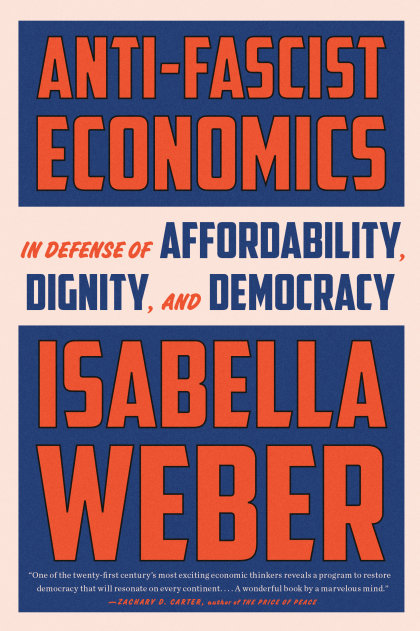
Anti-Fascist Economics
Anti-Fascist Economics
Couldn't load pickup availability
Collapsible content
ABOUT
On the night of President Trump's second presidential victory, economist Isabella Weber tweeted: "Can we now finally have a serious conversation about an anti-fascist economics?" In her view, Democrats had missed the seriousness of the affordability crisis in the wake of pandemic-era inflation. By refusing to step in to protect their constituencies against price explosions in essentials and corporate profiteering, they left room amidst the global crisis for the resurgence of the politics of resentment that Trump and the right reveled in.
Her question, though, was a bold one with implications that reached far beyond one election. In a neoliberal world, we tell people at the same time: Democracy is the highest form of political organization. And: When it comes to the economy, to the material foundation of our life, the best the representatives of the people can do is to subordinate their constituencies to the corporate pursuit of profits. This basic contradiction between the rule of the people and the rule of the market makes neoliberal democracy vulnerable to the threat of fascism, she argues. Economists have too often acted as prophets of market subordination and ended up waxing the slippery slope to fascism. Isabella Weber warns that if we are serious about saving democracy and preventing the further rise of fascists, we need an economics that serves democracy and centers people’s needs and dignity rather than seeing their fulfillment as a welcome side effect in the pursuit of other goals.
In Anti-Fascist Economics, Weber proposes just such a way out. She envisions an economics that centers on essentials for livelihoods and production, that strives to make life on our planet livable for all, that confronts rather than conceals corporate power, and that charts the way towards international cooperation rather than getting stuck in the dichotomy of free trade and trade wars. To halt the further rise of fascism, we need a tangible alternative to the dystopian status quo, she insists, one that takes affordability seriously as a foundation of democracy. In this paradigm-shifting book, Weber recalls a history of mid-twentieth-century economists for whom “never again” was the North star and reinvents their thinking for our day.
STANDARD, PRIMARY, DM AND VARIANT COVERS
Standard and Primary covers are widely available through general retailers. They often have higher print runs and can be cheaper, especially during sales.
In contrast, Direct Market (DM) and variant covers are primarily sold in comic shops. DM editions tend to have more limited availability and may be more valuable to collectors.
The main differences lie in artwork style, availability, price, and collector appeal. Ultimately, the choice between standard and variant covers depends on personal preference, budget, and individual collecting goals.
PRODUCT TYPES
Comic book enthusiasts have various formats to choose from when collecting their favorite stories.
Here's a brief overview of the main types:
Omnibus
- Large, hardcover collections
- Usually contain complete runs or extensive story arcs
- Typically 800-1000+ pages
- Higher price point, often €100-€150
Oversized Hardcover (OHC)
- Similar dimensions to omnibus, but thinner
- Collect shorter runs or story arcs
- Usually 300-600 pages
- Priced between €30-€50
Hardcover (HC)
- Standard-sized hardcover books
- Collect 6-12 issues typically
- Similar dimensions to single issues, but with a hard cover
- Priced around €25-€35
Trade Paperback (TP)
- Softcover collections
- Standard comic book size
- Usually collect 4-6 issues
- Most affordable option, typically €15-€25
Other Formats
- Absolute Editions: Oversized, deluxe hardcovers (mainly DC Comics)
- Compendiums: Massive paperback collections
- Graphic Novels (OGN/GN): Original stories not previously released as single issues
The choice between these formats often depends on personal preference, budget, and collecting goals. Omnibus and OHC editions offer larger artwork and more content but at a higher price, while TPs provide a more affordable way to collect complete story arcs