

Knopf Doubleday Publishing Group
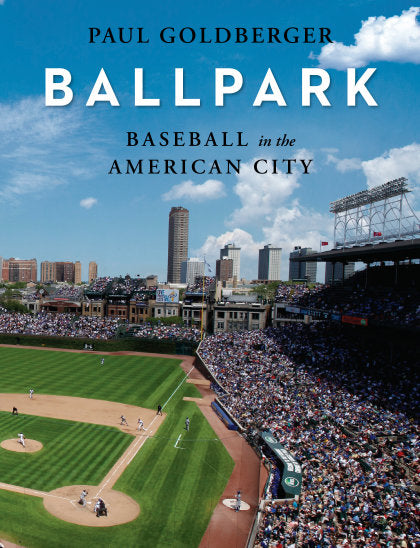
Ballpark
Ballpark
Couldn't load pickup availability
Collapsible content
ABOUT
From the earliest corrals of the mid-1800s (Union Grounds in Brooklyn was a "saloon in the open air"), to the much mourned parks of the early 1900s (Detroit's Tiger Stadium, Cincinnati's Palace of the Fans), to the stadiums we fill today, Paul Goldberger makes clear the inextricable bond between the American city and America's favorite pastime. In the changing locations and architecture of our ballparks, Goldberger reveals the manifestations of a changing society: the earliest ballparks evoked the Victorian age in their accommodations--bleachers for the riffraff, grandstands for the middle-class; the "concrete donuts" of the 1950s and '60s made plain television's grip on the public's attention; and more recent ballparks, like Baltimore's Camden Yards, signal a new way forward for stadium design and for baseball's role in urban development. Throughout, Goldberger shows us the way in which baseball's history is concurrent with our cultural history: the rise of urban parks and public transportation; the development of new building materials and engineering and design skills. And how the site details and the requirements of the game--the diamond, the outfields, the walls, the grandstands--shaped our most beloved ballparks.
A fascinating, exuberant ode to the Edens at the heart of our cities--where dreams are as limitless as the outfields.
STANDARD, PRIMARY, DM AND VARIANT COVERS
Standard and Primary covers are widely available through general retailers. They often have higher print runs and can be cheaper, especially during sales.
In contrast, Direct Market (DM) and variant covers are primarily sold in comic shops. DM editions tend to have more limited availability and may be more valuable to collectors.
The main differences lie in artwork style, availability, price, and collector appeal. Ultimately, the choice between standard and variant covers depends on personal preference, budget, and individual collecting goals.
PRODUCT TYPES
Comic book enthusiasts have various formats to choose from when collecting their favorite stories.
Here's a brief overview of the main types:
Omnibus
- Large, hardcover collections
- Usually contain complete runs or extensive story arcs
- Typically 800-1000+ pages
- Higher price point, often €100-€150
Oversized Hardcover (OHC)
- Similar dimensions to omnibus, but thinner
- Collect shorter runs or story arcs
- Usually 300-600 pages
- Priced between €30-€50
Hardcover (HC)
- Standard-sized hardcover books
- Collect 6-12 issues typically
- Similar dimensions to single issues, but with a hard cover
- Priced around €25-€35
Trade Paperback (TP)
- Softcover collections
- Standard comic book size
- Usually collect 4-6 issues
- Most affordable option, typically €15-€25
Other Formats
- Absolute Editions: Oversized, deluxe hardcovers (mainly DC Comics)
- Compendiums: Massive paperback collections
- Graphic Novels (OGN/GN): Original stories not previously released as single issues
The choice between these formats often depends on personal preference, budget, and collecting goals. Omnibus and OHC editions offer larger artwork and more content but at a higher price, while TPs provide a more affordable way to collect complete story arcs