

Penguin Publishing Group
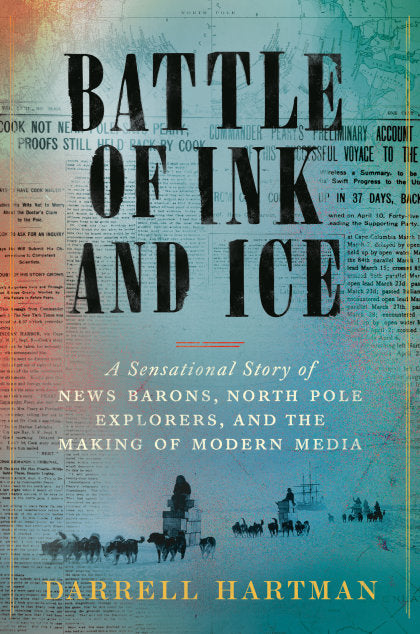
Battle of Ink and Ice
Battle of Ink and Ice
Couldn't load pickup availability
Collapsible content
ABOUT
"Absolutely gripping… a perfectly splendid read—I highly, highly recommend it” -- Douglas Preston, author of the #1 New York Times bestseller The Lost City of the Monkey God
A sixty-year saga of frostbite and fake news that follows the no-holds-barred battle between two legendary explorers to reach the North Pole, and the newspapers which stopped at nothing to get–and sell–the story.
In the fall of 1909, a pair of bitter contests captured the world’s attention. The American explorers Robert Peary and Frederick Cook both claimed to have discovered the North Pole, sparking a vicious feud that was unprecedented in international scientific and geographic circles. At the same time, the rivalry between two powerful New York City newspapers—the storied Herald and the ascendant Times—fanned the flames of the so-called polar controversy, as each paper financially and reputationally committed itself to an opposing explorer and fought desperately to defend him.
The Herald was owned and edited by James Gordon Bennett, Jr., an eccentric playboy whose nose for news was matched only by his appetite for debauchery and champagne. The Times was published by Adolph Ochs, son of Jewish immigrants, who’d improbably rescued the paper from extinction and turned it into an emerging powerhouse. The battle between Cook and Peary would have enormous consequences for both newspapers, and help to determine the future of corporate media.
BATTLE OF INK AND ICE presents a frank portrayal of Arctic explorers, brave men who both inspired and deceived the public. It also sketches a vivid portrait of the newspapers that funded, promoted, narrated, and often distorted their exploits. It recounts a sixty-year saga of frostbite and fake news, one that culminates with an unjustly overlooked chapter in the origin story of the modern New York Times.
By turns tragic and absurd, BATTLE OF INK AND ICE brims with contemporary relevance, touching as it does on themes of class, celebrity, the ever-quickening news cycle, and the benefits and pitfalls of an increasingly interconnected world. Above all, perhaps, its cast of characters testifies—colorfully and compellingly—to the ongoing role of personality and publicity in American cultural life as the Gilded Age gave way to the twentieth century—the American century.
STANDARD, PRIMARY, DM AND VARIANT COVERS
Standard and Primary covers are widely available through general retailers. They often have higher print runs and can be cheaper, especially during sales.
In contrast, Direct Market (DM) and variant covers are primarily sold in comic shops. DM editions tend to have more limited availability and may be more valuable to collectors.
The main differences lie in artwork style, availability, price, and collector appeal. Ultimately, the choice between standard and variant covers depends on personal preference, budget, and individual collecting goals.
PRODUCT TYPES
Comic book enthusiasts have various formats to choose from when collecting their favorite stories.
Here's a brief overview of the main types:
Omnibus
- Large, hardcover collections
- Usually contain complete runs or extensive story arcs
- Typically 800-1000+ pages
- Higher price point, often €100-€150
Oversized Hardcover (OHC)
- Similar dimensions to omnibus, but thinner
- Collect shorter runs or story arcs
- Usually 300-600 pages
- Priced between €30-€50
Hardcover (HC)
- Standard-sized hardcover books
- Collect 6-12 issues typically
- Similar dimensions to single issues, but with a hard cover
- Priced around €25-€35
Trade Paperback (TP)
- Softcover collections
- Standard comic book size
- Usually collect 4-6 issues
- Most affordable option, typically €15-€25
Other Formats
- Absolute Editions: Oversized, deluxe hardcovers (mainly DC Comics)
- Compendiums: Massive paperback collections
- Graphic Novels (OGN/GN): Original stories not previously released as single issues
The choice between these formats often depends on personal preference, budget, and collecting goals. Omnibus and OHC editions offer larger artwork and more content but at a higher price, while TPs provide a more affordable way to collect complete story arcs