

Knopf Canada
Being Generous
Being Generous
Couldn't load pickup availability
Collapsible content
ABOUT
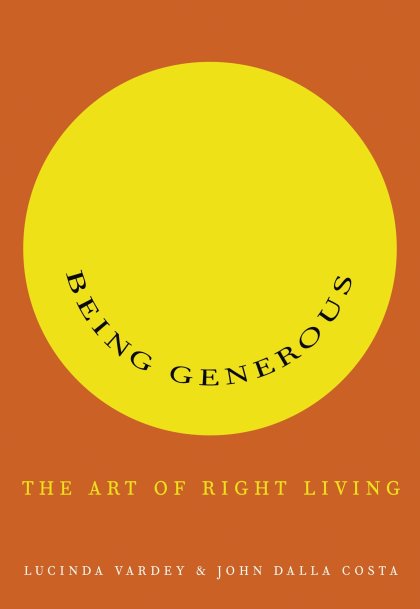
Think that’s a bold claim? It is, but it’ s also true. We can all be generous with our money when an occasion like Christmas rolls around, or when disaster strikes as it did with the Boxing Day tsunami of 2004. But Lucinda Vardey and John Dalla Costa say that this kind of giving segregates generosity, and makes it a special activity only for special times. If we’re truly going to help this troubled world, as individuals we must investigate other possibilities for being generous as well, by helping those we interact with every day: our children, colleagues, parents, friends and the homeless men and women we encounter when out and about in our cities. We learn that the four most generous words in the English language are “I’m sorry” and “Thank you.” We learn that if we ask, “What do you need?” we may be surprised how readily we can provide assistance, and how a single generous act may turn into something that circulates to include many.
Lucinda and John are a married couple who have committed–they say “humbly and imperfectly”–to making generosity a central practice in their daily lives. What they refer to as their art of right living, within family, work and community, is both a mode of being and a value that infiltrates all others. Generosity inspires and guides them, and continually tests and teaches them. This book is filled with true stories they’ve collected about generosity in action. Being Generous is their gift to readers, written to enable and encourage us to follow the generous way.
She was famous for her work with the poor in the streets of Calcutta. One day a beggar by the road ran up to her with a small coin– financially worthless to anyone but him. It was his day’s take on a long, hot and humid day, and he wanted to give it to her. She pondered what to do. If she took the money then he would have nothing at all, but if she rejected him, it would not only hurt him but insult his generosity. She stretched out her hand–he, who never had the chance to give, could give to Mother Teresa. The joy on his face said everything to her.
The Lesson: Saying no to another’s offer denies them the joy of giving. Accepting what they wish to give–even if you don’t need it–is what practising true generosity is about.
—from Being Generous
STANDARD, PRIMARY, DM AND VARIANT COVERS
Standard and Primary covers are widely available through general retailers. They often have higher print runs and can be cheaper, especially during sales.
In contrast, Direct Market (DM) and variant covers are primarily sold in comic shops. DM editions tend to have more limited availability and may be more valuable to collectors.
The main differences lie in artwork style, availability, price, and collector appeal. Ultimately, the choice between standard and variant covers depends on personal preference, budget, and individual collecting goals.
PRODUCT TYPES
Comic book enthusiasts have various formats to choose from when collecting their favorite stories.
Here's a brief overview of the main types:
Omnibus
- Large, hardcover collections
- Usually contain complete runs or extensive story arcs
- Typically 800-1000+ pages
- Higher price point, often €100-€150
Oversized Hardcover (OHC)
- Similar dimensions to omnibus, but thinner
- Collect shorter runs or story arcs
- Usually 300-600 pages
- Priced between €30-€50
Hardcover (HC)
- Standard-sized hardcover books
- Collect 6-12 issues typically
- Similar dimensions to single issues, but with a hard cover
- Priced around €25-€35
Trade Paperback (TP)
- Softcover collections
- Standard comic book size
- Usually collect 4-6 issues
- Most affordable option, typically €15-€25
Other Formats
- Absolute Editions: Oversized, deluxe hardcovers (mainly DC Comics)
- Compendiums: Massive paperback collections
- Graphic Novels (OGN/GN): Original stories not previously released as single issues
The choice between these formats often depends on personal preference, budget, and collecting goals. Omnibus and OHC editions offer larger artwork and more content but at a higher price, while TPs provide a more affordable way to collect complete story arcs