

Clarkson Potter/Ten Speed
Bi-Rite Market's Eat Good Food
Bi-Rite Market's Eat Good Food
Couldn't load pickup availability
Collapsible content
ABOUT
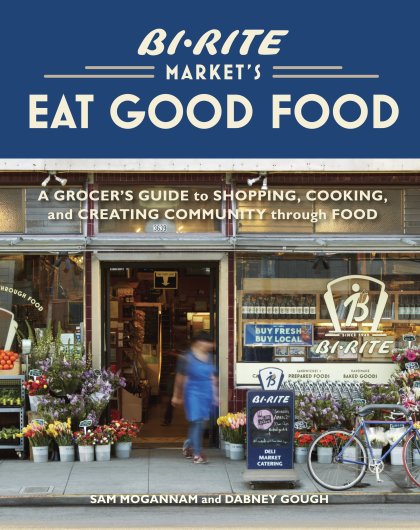
San Francisco’s Bi-Rite Market has a following akin to a hot restaurant—its grocery goods and prepared foods have made it a destination for lovers of great food. In Eat Good Food, former chef turned market owner Sam Mogannam explains how to source and use the finest farm-fresh ingredients and artisanal food products, decipher labels and terms, and build a great pantry.
Eat Good Food gives you a new way to look at food, not only the ingredients you buy but also how to prepare them. Featuring ninety recipes for the dishes that have made Bi-Rite Market’s in-house kitchen a destination for food lovers, combined with Sam’s favorite recipes, you’ll discover exactly how to get the best flavor from each ingredient. Dishes such as Summer Corn and Tomato Salad, Spicy String Beans with Sesame Seeds, Roasted Beet Salad with Pickled Onions and Feta, Ginger-Lemongrass Chicken Skewers with Spicy Peanut Dipping Sauce, Apricot-Ginger Scones, and Chocolate Pots de Crème will delight throughout the year.
No matter where you live or shop, Sam provides new insight on ingredients familiar as well unique, including:
• Why spinach from open bins is better than prepackaged greens
• What the material used to wrap cheese can tell you about the quality of the cheese itself
• How to tell where an olive oil is really from—and why it matters
• What “never ever” programs are, and why you should look for them when buying meat
More engaging than a field guide and more informative than a standard cookbook, and with primers on cooking techniques and anecdotes that will entertain, enlighten, and inspire, Eat Good Food will revolutionize the way home cooks shop and eat.
STANDARD, PRIMARY, DM AND VARIANT COVERS
Standard and Primary covers are widely available through general retailers. They often have higher print runs and can be cheaper, especially during sales.
In contrast, Direct Market (DM) and variant covers are primarily sold in comic shops. DM editions tend to have more limited availability and may be more valuable to collectors.
The main differences lie in artwork style, availability, price, and collector appeal. Ultimately, the choice between standard and variant covers depends on personal preference, budget, and individual collecting goals.
PRODUCT TYPES
Comic book enthusiasts have various formats to choose from when collecting their favorite stories.
Here's a brief overview of the main types:
Omnibus
- Large, hardcover collections
- Usually contain complete runs or extensive story arcs
- Typically 800-1000+ pages
- Higher price point, often €100-€150
Oversized Hardcover (OHC)
- Similar dimensions to omnibus, but thinner
- Collect shorter runs or story arcs
- Usually 300-600 pages
- Priced between €30-€50
Hardcover (HC)
- Standard-sized hardcover books
- Collect 6-12 issues typically
- Similar dimensions to single issues, but with a hard cover
- Priced around €25-€35
Trade Paperback (TP)
- Softcover collections
- Standard comic book size
- Usually collect 4-6 issues
- Most affordable option, typically €15-€25
Other Formats
- Absolute Editions: Oversized, deluxe hardcovers (mainly DC Comics)
- Compendiums: Massive paperback collections
- Graphic Novels (OGN/GN): Original stories not previously released as single issues
The choice between these formats often depends on personal preference, budget, and collecting goals. Omnibus and OHC editions offer larger artwork and more content but at a higher price, while TPs provide a more affordable way to collect complete story arcs