

Random House Publishing Group
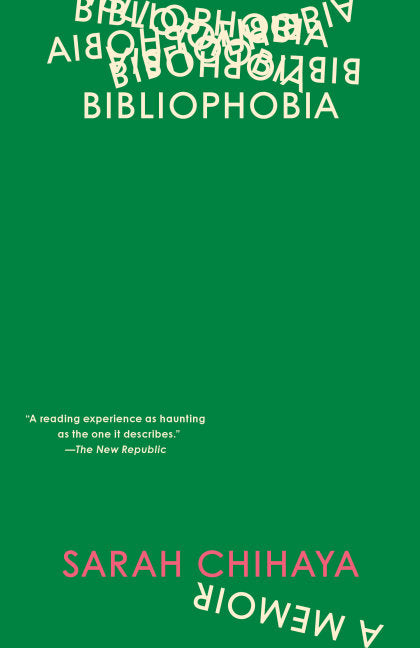
Bibliophobia
Bibliophobia
Couldn't load pickup availability
Collapsible content
ABOUT
“Stirring and sparkling.”—The Washington Post
Books can seduce you. They can, Sarah Chihaya believes, annihilate, reveal, and provoke you. And anyone incurably obsessed with books understands this kind of unsettling literary encounter. Sarah calls books that have this effect “Life Ruiners”.
Her Life Ruiner, Toni Morrison’s The Bluest Eye, became a talisman for her in high school when its electrifying treatment of race exposed Sarah’s deepest feelings about being Japanese American in a predominantly white suburb of Cleveland. But Sarah had always lived through her books, seeking escape, self-definition, and rules for living. She built her life around reading, wrote criticism, and taught literature at an Ivy League University. Then she was hospitalized for a nervous breakdown, and the world became an unreadable blank page. In the aftermath, she was faced with a question. Could we ever truly rewrite the stories that govern our lives?
Bibliophobia is an alternately searing and darkly humorous story of breakdown and survival told through books. Delving into texts such as Anne of Green Gables, Possession, A Tale for the Time Being, The Last Samurai, Chihaya interrogates her cultural identity, her relationship with depression, and the intoxicating, sometimes painful, ways books push back on those who love them.
A PUBLISHERS WEEKLY AND ELECTRIC LIT BEST BOOK OF THE YEAR
STANDARD, PRIMARY, DM AND VARIANT COVERS
Standard and Primary covers are widely available through general retailers. They often have higher print runs and can be cheaper, especially during sales.
In contrast, Direct Market (DM) and variant covers are primarily sold in comic shops. DM editions tend to have more limited availability and may be more valuable to collectors.
The main differences lie in artwork style, availability, price, and collector appeal. Ultimately, the choice between standard and variant covers depends on personal preference, budget, and individual collecting goals.
PRODUCT TYPES
Comic book enthusiasts have various formats to choose from when collecting their favorite stories.
Here's a brief overview of the main types:
Omnibus
- Large, hardcover collections
- Usually contain complete runs or extensive story arcs
- Typically 800-1000+ pages
- Higher price point, often €100-€150
Oversized Hardcover (OHC)
- Similar dimensions to omnibus, but thinner
- Collect shorter runs or story arcs
- Usually 300-600 pages
- Priced between €30-€50
Hardcover (HC)
- Standard-sized hardcover books
- Collect 6-12 issues typically
- Similar dimensions to single issues, but with a hard cover
- Priced around €25-€35
Trade Paperback (TP)
- Softcover collections
- Standard comic book size
- Usually collect 4-6 issues
- Most affordable option, typically €15-€25
Other Formats
- Absolute Editions: Oversized, deluxe hardcovers (mainly DC Comics)
- Compendiums: Massive paperback collections
- Graphic Novels (OGN/GN): Original stories not previously released as single issues
The choice between these formats often depends on personal preference, budget, and collecting goals. Omnibus and OHC editions offer larger artwork and more content but at a higher price, while TPs provide a more affordable way to collect complete story arcs