

Beacon Press
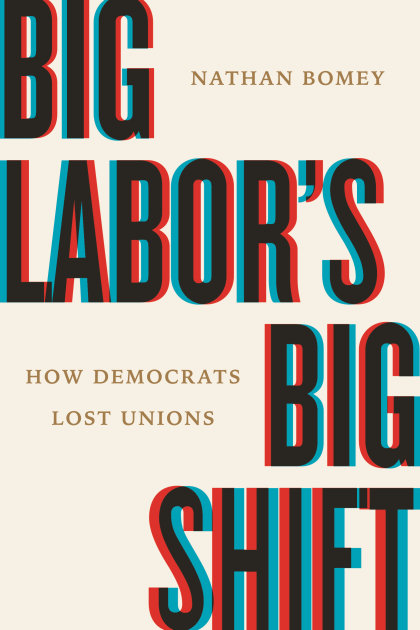
Big Labor's Big Shift
Big Labor's Big Shift
Couldn't load pickup availability
Collapsible content
ABOUT
Unions helped construct the American middle class, defeat Jim Crow, and advance progressive rights, but in Trump’s America, the labor movement is changing. In Solidarity, journalist Nathan Bomey explores how Big Labor and the working class are no longer an automatic ally of the American left.
Fueled by decades of economic decline, political disillusionment, and cultural disenfranchisement, new politically nebulous and economically populist leaders in the movement are building a powerful new movement based on class warfare that prizes wage and benefit gains over traditional progressive priorities. Through original reporting and first-hand interviews, Bomey traces key events that have led to this political shift. Bomey reveals:
-At the Teamsters, president Sean O’Brien is cozying up to Donald Trump and blasting Democrats as tools of big business, even showing up at the Republican National Convention to deliver his message.
-At the United Auto Workers, president Shawn Fain is seizing an opportunity to break the free trade consensus in Washington. The devout Christian, who wields religious rhetoric from the stump, is aligning with the Trump White House on tariffs and blasting Democrats for aggressively pursuing electric vehicles to fight climate change.
In tracking the century-long arc of the US labor movement, once a champion of social justice for all Americans, Bomey details how the recent change in fortunes for the UAW, Teamsters, and other major private unions has been driven by the same forces that fueled the political rise of Trump and MAGA. He shows how the two interconnected phenomena represent a massive political realignment—not just along cultural and nationalism lines, but of the working class itself away from its historic roots in the Democratic party.
Urgent and compelling, Solidarity encapsulates the fight for the soul of the union movement.
STANDARD, PRIMARY, DM AND VARIANT COVERS
Standard and Primary covers are widely available through general retailers. They often have higher print runs and can be cheaper, especially during sales.
In contrast, Direct Market (DM) and variant covers are primarily sold in comic shops. DM editions tend to have more limited availability and may be more valuable to collectors.
The main differences lie in artwork style, availability, price, and collector appeal. Ultimately, the choice between standard and variant covers depends on personal preference, budget, and individual collecting goals.
PRODUCT TYPES
Comic book enthusiasts have various formats to choose from when collecting their favorite stories.
Here's a brief overview of the main types:
Omnibus
- Large, hardcover collections
- Usually contain complete runs or extensive story arcs
- Typically 800-1000+ pages
- Higher price point, often €100-€150
Oversized Hardcover (OHC)
- Similar dimensions to omnibus, but thinner
- Collect shorter runs or story arcs
- Usually 300-600 pages
- Priced between €30-€50
Hardcover (HC)
- Standard-sized hardcover books
- Collect 6-12 issues typically
- Similar dimensions to single issues, but with a hard cover
- Priced around €25-€35
Trade Paperback (TP)
- Softcover collections
- Standard comic book size
- Usually collect 4-6 issues
- Most affordable option, typically €15-€25
Other Formats
- Absolute Editions: Oversized, deluxe hardcovers (mainly DC Comics)
- Compendiums: Massive paperback collections
- Graphic Novels (OGN/GN): Original stories not previously released as single issues
The choice between these formats often depends on personal preference, budget, and collecting goals. Omnibus and OHC editions offer larger artwork and more content but at a higher price, while TPs provide a more affordable way to collect complete story arcs