

Penguin Publishing Group
Biopunk
Biopunk
Couldn't load pickup availability
Collapsible content
ABOUT
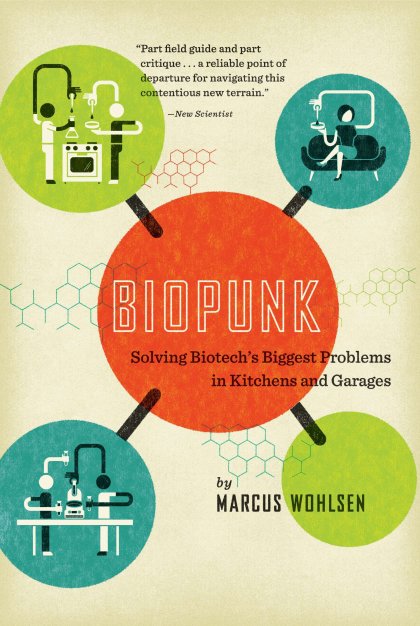
The most disruptive force on the planet resides in DNA. Biotech companies and academic researchers are just beginning to unlock the potential of piecing together life from scratch. Champions of synthetic biology believe that turning genetic code into Lego-like blocks to build never-before-seen organisms could solve the thorniest challenges in medicine, energy, and environmental protection. But as the hackers who cracked open the potential of the personal computer and the Internet proved, the most revolutionary discoveries often emerge from out-of-the-way places, forged by brilliant outsiders with few resources besides boundless energy and great ideas.
In Biopunk, Marcus Wohlsen chronicles a growing community of DIY scientists working outside the walls of corporations and universities who are committed to democratizing DNA the way the Internet did information. The "biohacking" movement, now in its early, heady days, aims to unleash an outbreak of genetically modified innovation by making the tools and techniques of biotechnology accessible to everyone. Borrowing their idealism from the worlds of open-source software, artisinal food, Internet startups, and the Peace Corps, biopunks are devoted advocates for open-sourcing the basic code of life. They believe in the power of individuals with access to DNA to solve the world's biggest problems.
You'll meet a new breed of hackers who aren't afraid to get their hands wet, from entrepreneurs who aim to bring DNA-based medical tools to the poorest of the poor to a curious tinkerer who believes a tub of yogurt and a jellyfish gene could protect the world's food supply. These biohackers include:
-A duo who started a cancer drug company in their kitchen
-A team who built an open-source DNA copy machine
-A woman who developed a genetic test in her apartment for a deadly disease that had stricken her family
Along with the potential of citizen science to bring about disruptive change, Wohlsen explores the risks of DIY bioterrorism, the possibility of genetic engineering experiments gone awry, and whether the ability to design life from scratch on a laptop might come sooner than we think.
STANDARD, PRIMARY, DM AND VARIANT COVERS
Standard and Primary covers are widely available through general retailers. They often have higher print runs and can be cheaper, especially during sales.
In contrast, Direct Market (DM) and variant covers are primarily sold in comic shops. DM editions tend to have more limited availability and may be more valuable to collectors.
The main differences lie in artwork style, availability, price, and collector appeal. Ultimately, the choice between standard and variant covers depends on personal preference, budget, and individual collecting goals.
PRODUCT TYPES
Comic book enthusiasts have various formats to choose from when collecting their favorite stories.
Here's a brief overview of the main types:
Omnibus
- Large, hardcover collections
- Usually contain complete runs or extensive story arcs
- Typically 800-1000+ pages
- Higher price point, often €100-€150
Oversized Hardcover (OHC)
- Similar dimensions to omnibus, but thinner
- Collect shorter runs or story arcs
- Usually 300-600 pages
- Priced between €30-€50
Hardcover (HC)
- Standard-sized hardcover books
- Collect 6-12 issues typically
- Similar dimensions to single issues, but with a hard cover
- Priced around €25-€35
Trade Paperback (TP)
- Softcover collections
- Standard comic book size
- Usually collect 4-6 issues
- Most affordable option, typically €15-€25
Other Formats
- Absolute Editions: Oversized, deluxe hardcovers (mainly DC Comics)
- Compendiums: Massive paperback collections
- Graphic Novels (OGN/GN): Original stories not previously released as single issues
The choice between these formats often depends on personal preference, budget, and collecting goals. Omnibus and OHC editions offer larger artwork and more content but at a higher price, while TPs provide a more affordable way to collect complete story arcs