

Random House Publishing Group
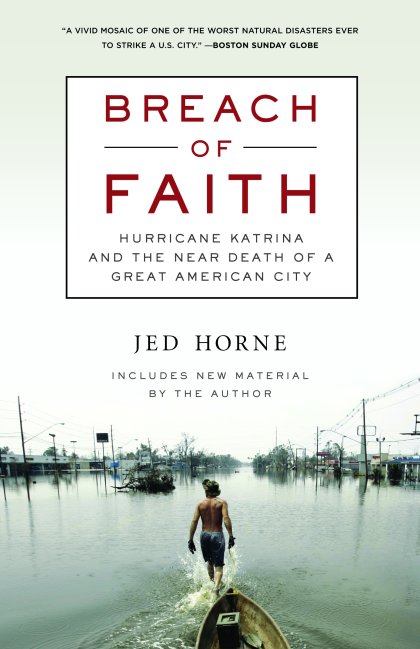
Breach of Faith
Breach of Faith
Couldn't load pickup availability
Collapsible content
ABOUT
As the Big One bore down, New Orleanians rich and poor, black and white, lurched from giddy revelry to mandatory evacuation. The thousands who couldn’t or wouldn’t leave initially congratulated themselves on once again riding out the storm. But then the unimaginable happened: Within a day 80 percent of the city was under water. The rising tides chased horrified men and women into snake-filled attics and onto the roofs of their houses. Heroes in swamp boats and helicopters braved wind and storm surge to bring survivors to dry ground. Mansions and shacks alike were swept away, and then a tidal wave of lawlessness inundated the Big Easy. Screams and gunshots echoed through the blacked-out Superdome. Police threw away their badges and joined in the looting. Corpses drifted in the streets for days, and buildings marinated for weeks in a witches’ brew of toxic chemicals that, when the floodwaters finally were pumped out, had turned vast reaches of the city into a ghost town.
Horne takes readers into the private worlds and inner thoughts of storm victims from all walks of life to weave a tapestry as intricate and vivid as the city itself. Politicians, thieves, nurses, urban visionaries, grieving mothers, entrepreneurs with an eye for quick profit at public expense–all of these lives collide in a chronicle that is harrowing, angry, and often slyly ironic.
Even before stranded survivors had been plucked from their roofs, government officials embarked on a vicious blame game that further snarled the relief operation and bedeviled scientists striving to understand the massive levee failures and build New Orleans a foolproof flood defense. As Horne makes clear, this shameless politicization set the tone for the ongoing reconstruction effort, which has been haunted by racial and class tensions from the start.
Katrina was a catastrophe deeply rooted in the politics and culture of the city that care forgot and of a nation that forgot to care. In Breach of Faith, Jed Horne has created a spellbinding epic of one of the worst disasters of our time.
STANDARD, PRIMARY, DM AND VARIANT COVERS
Standard and Primary covers are widely available through general retailers. They often have higher print runs and can be cheaper, especially during sales.
In contrast, Direct Market (DM) and variant covers are primarily sold in comic shops. DM editions tend to have more limited availability and may be more valuable to collectors.
The main differences lie in artwork style, availability, price, and collector appeal. Ultimately, the choice between standard and variant covers depends on personal preference, budget, and individual collecting goals.
PRODUCT TYPES
Comic book enthusiasts have various formats to choose from when collecting their favorite stories.
Here's a brief overview of the main types:
Omnibus
- Large, hardcover collections
- Usually contain complete runs or extensive story arcs
- Typically 800-1000+ pages
- Higher price point, often €100-€150
Oversized Hardcover (OHC)
- Similar dimensions to omnibus, but thinner
- Collect shorter runs or story arcs
- Usually 300-600 pages
- Priced between €30-€50
Hardcover (HC)
- Standard-sized hardcover books
- Collect 6-12 issues typically
- Similar dimensions to single issues, but with a hard cover
- Priced around €25-€35
Trade Paperback (TP)
- Softcover collections
- Standard comic book size
- Usually collect 4-6 issues
- Most affordable option, typically €15-€25
Other Formats
- Absolute Editions: Oversized, deluxe hardcovers (mainly DC Comics)
- Compendiums: Massive paperback collections
- Graphic Novels (OGN/GN): Original stories not previously released as single issues
The choice between these formats often depends on personal preference, budget, and collecting goals. Omnibus and OHC editions offer larger artwork and more content but at a higher price, while TPs provide a more affordable way to collect complete story arcs