

Penguin Publishing Group
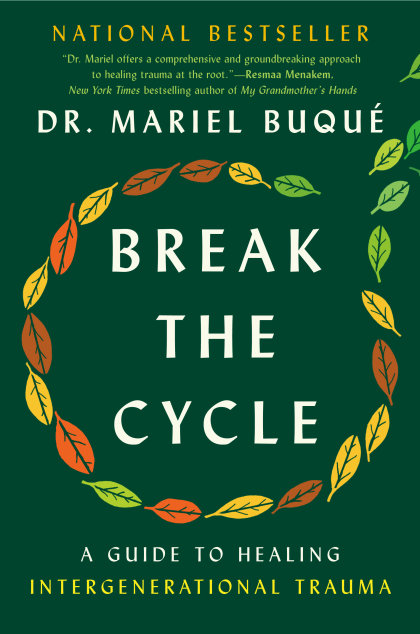
Break the Cycle
Break the Cycle
Couldn't load pickup availability
Collapsible content
ABOUT
A Next Big Idea Club Must-Read Title
The definitive, paradigm-shifting guide to healing intergenerational trauma—weaving together scientific research with practical exercises and stories from the therapy room—from Dr. Mariel Buqué, PhD, a Columbia University–trained trauma-informed psychologist and practitioner of holistic healing
From Dr. Mariel Buqué, a leading trauma psychologist, comes this groundbreaking guide to transforming intergenerational pain into intergenerational abundance. With Break the Cycle, she delivers the definitive guide to healing inherited trauma. Weaving together scientific research with practical exercises and stories from the therapy room, Dr. Buqué teaches readers how trauma is transmitted from one generation to the next and how they can break the cycle through tangible therapeutic practices, learning to pass down strength instead of pain to future generations.
When a physical wound is left unhealed, it continues to cause pain and can infect the whole body. When emotions are left unhealed, they similarly cause harm that spreads to other parts of our lives, hurting our family, friends, community members, and others. Eventually, this hurt can injure an entire lineage, metastasizing across years and generations. This is intergenerational trauma.
This trauma is why some of us become estranged from our families, why some of us are people pleasers, why some of us find ourselves in codependent relationships. This trauma can be rooted in the experiences of ancestors, who may have suffered due to unhealthy family dynamics, and it can be collective, the result of a shared experience like systemic oppression, or harmful ingrained behaviors in a culture like the acceptance of physical discipline of children, or even a natural disaster like a pandemic. These wounds are complex, impacting our minds, bodies, and spirits. Healing requires a holistic approach that has so far been absent from the field of psychology. Until now.
STANDARD, PRIMARY, DM AND VARIANT COVERS
Standard and Primary covers are widely available through general retailers. They often have higher print runs and can be cheaper, especially during sales.
In contrast, Direct Market (DM) and variant covers are primarily sold in comic shops. DM editions tend to have more limited availability and may be more valuable to collectors.
The main differences lie in artwork style, availability, price, and collector appeal. Ultimately, the choice between standard and variant covers depends on personal preference, budget, and individual collecting goals.
PRODUCT TYPES
Comic book enthusiasts have various formats to choose from when collecting their favorite stories.
Here's a brief overview of the main types:
Omnibus
- Large, hardcover collections
- Usually contain complete runs or extensive story arcs
- Typically 800-1000+ pages
- Higher price point, often €100-€150
Oversized Hardcover (OHC)
- Similar dimensions to omnibus, but thinner
- Collect shorter runs or story arcs
- Usually 300-600 pages
- Priced between €30-€50
Hardcover (HC)
- Standard-sized hardcover books
- Collect 6-12 issues typically
- Similar dimensions to single issues, but with a hard cover
- Priced around €25-€35
Trade Paperback (TP)
- Softcover collections
- Standard comic book size
- Usually collect 4-6 issues
- Most affordable option, typically €15-€25
Other Formats
- Absolute Editions: Oversized, deluxe hardcovers (mainly DC Comics)
- Compendiums: Massive paperback collections
- Graphic Novels (OGN/GN): Original stories not previously released as single issues
The choice between these formats often depends on personal preference, budget, and collecting goals. Omnibus and OHC editions offer larger artwork and more content but at a higher price, while TPs provide a more affordable way to collect complete story arcs