

Fantagraphics
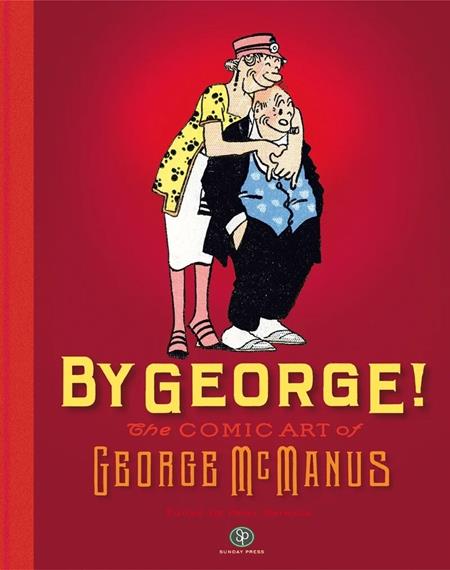
BY GEORGE THE COMIC ART OF GEORGE MCMANUS
BY GEORGE THE COMIC ART OF GEORGE MCMANUS
Couldn't load pickup availability
Collapsible content
ABOUT
"By George" is a 500-year-old exclamation used to express astonishment; a euphemism to avoid naming a divinity. A fitting title for this collection of classic comic art—both astonishing and, in its own way, divine. In 1913, George McManus was already a successful cartoonist with over a dozen hit comic strips to his credit. That year saw the debut of his signature creation, Bringing Up Father, soon to become an international sensation—the most popular comic strip in the world. In 1918 it appeared as a Sunday feature in full color, full-page splendor that is now, along with the artist's earlier works, recreated by Sunday Press. This volume displays the long career of George McManus, from his early days as an artist for the St. Louis Republican, to his ground-breaking work for Joseph Pulitzer and William Randolph Hearst in New York. Early features like Panhandle Pete and Nibsy the Newsboy show McManus as one of the "Founders of the Funnies. " With The Whole Blooming Family, The Newlyweds/Their Only Child, he pioneered the type of family-humor comic strip that led to the sitcoms of radio and television. This form reached a peak with the battling (yet loving) spouses, Jiggs and Maggie in Bringing Up Father. The story behind the over 150 strips found in this collection is related in great detail by historian Paul C. Tumey in his detailed biographical introduction. McManus and his wife, even more so than his characters, were the toast of society, both at home and abroad, which added to his fame and the popularity of the strip. The book's foreword by internationally renowned cartoonist and designer Joost Swarte offers an appreciation and a description of the important influence of McManus on European artists, including Tintin's Hergé. Educator and historian Eike Exner chronicles McManus's Asian connection as one of the main American influences in the development of Manga. Completing this comprehensive volume are photographs, illustrations, and memorabilia highlighting the long career of one of the world's greatest cartoonists—making his readers laugh at his characters (and themselves) for over half a century. McManus has a well-deserved place in the pantheon of American cartoon artists, but never before has had a comprehensive collection of his work. Now, By George, here it is!
STANDARD, PRIMARY, DM AND VARIANT COVERS
Standard and Primary covers are widely available through general retailers. They often have higher print runs and can be cheaper, especially during sales.
In contrast, Direct Market (DM) and variant covers are primarily sold in comic shops. DM editions tend to have more limited availability and may be more valuable to collectors.
The main differences lie in artwork style, availability, price, and collector appeal. Ultimately, the choice between standard and variant covers depends on personal preference, budget, and individual collecting goals.
PRODUCT TYPES
Comic book enthusiasts have various formats to choose from when collecting their favorite stories.
Here's a brief overview of the main types:
Omnibus
- Large, hardcover collections
- Usually contain complete runs or extensive story arcs
- Typically 800-1000+ pages
- Higher price point, often €100-€150
Oversized Hardcover (OHC)
- Similar dimensions to omnibus, but thinner
- Collect shorter runs or story arcs
- Usually 300-600 pages
- Priced between €30-€50
Hardcover (HC)
- Standard-sized hardcover books
- Collect 6-12 issues typically
- Similar dimensions to single issues, but with a hard cover
- Priced around €25-€35
Trade Paperback (TP)
- Softcover collections
- Standard comic book size
- Usually collect 4-6 issues
- Most affordable option, typically €15-€25
Other Formats
- Absolute Editions: Oversized, deluxe hardcovers (mainly DC Comics)
- Compendiums: Massive paperback collections
- Graphic Novels (OGN/GN): Original stories not previously released as single issues
The choice between these formats often depends on personal preference, budget, and collecting goals. Omnibus and OHC editions offer larger artwork and more content but at a higher price, while TPs provide a more affordable way to collect complete story arcs