

Knopf Doubleday Publishing Group
Cabin Fever
Cabin Fever
Couldn't load pickup availability
Collapsible content
ABOUT
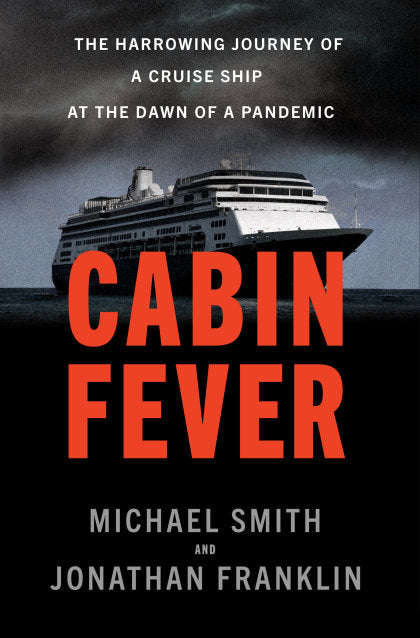
In early 2020, the world was on edge. An ominous virus was spreading on different continents, and no one knew what the coming weeks would bring. Far from the hot spots, the cruise ship Zaandam, owned by Holland America, was preparing to sail from Buenos Aires, Argentina, loaded with 1,200 passengers—Americans, Europeans and South Americans, plus 600 crew.
Most passengers were over the age of sixty-five. There was concern about the virus on the news, and it had already killed and sickened passengers on other Holland America ships. But that was oceans away, and escaping to sea at the ends of the earth for a few weeks seemed like it might be a good option. The cruise line had said the voyage (three weeks around the South American coastline to see some of the world’s most stunning natural wonders and ancient ruins) would carry on as scheduled, with no refunds. And it would be safe.
Among the travelers there is a retired American school superintendent on a dream vacation with his wife of fifty-six years, on a personal quest to see Machu Picchu. There is an Argentine psychologist taking this trip to celebrate her sixty-fourth birthday with her husband, though she finds herself fretting in her cabin on day one, trying to dismiss her fears of what she’s hearing on the news. There is an Indonesian laundry manager who's been toiling on Holland America cruise ships for thirty years, sending his monthly paycheck to his family back home.
Within days, people aboard Zaandam begin to fall sick. The world’s ports shut down. Zaandam becomes a top story on the news and is denied safe harbor everywhere. With only two doctors aboard and few medical supplies to test for or treat COVID-19, and with dwindling food and water, the ship wanders the oceans on an unthinkable journey.
STANDARD, PRIMARY, DM AND VARIANT COVERS
Standard and Primary covers are widely available through general retailers. They often have higher print runs and can be cheaper, especially during sales.
In contrast, Direct Market (DM) and variant covers are primarily sold in comic shops. DM editions tend to have more limited availability and may be more valuable to collectors.
The main differences lie in artwork style, availability, price, and collector appeal. Ultimately, the choice between standard and variant covers depends on personal preference, budget, and individual collecting goals.
PRODUCT TYPES
Comic book enthusiasts have various formats to choose from when collecting their favorite stories.
Here's a brief overview of the main types:
Omnibus
- Large, hardcover collections
- Usually contain complete runs or extensive story arcs
- Typically 800-1000+ pages
- Higher price point, often €100-€150
Oversized Hardcover (OHC)
- Similar dimensions to omnibus, but thinner
- Collect shorter runs or story arcs
- Usually 300-600 pages
- Priced between €30-€50
Hardcover (HC)
- Standard-sized hardcover books
- Collect 6-12 issues typically
- Similar dimensions to single issues, but with a hard cover
- Priced around €25-€35
Trade Paperback (TP)
- Softcover collections
- Standard comic book size
- Usually collect 4-6 issues
- Most affordable option, typically €15-€25
Other Formats
- Absolute Editions: Oversized, deluxe hardcovers (mainly DC Comics)
- Compendiums: Massive paperback collections
- Graphic Novels (OGN/GN): Original stories not previously released as single issues
The choice between these formats often depends on personal preference, budget, and collecting goals. Omnibus and OHC editions offer larger artwork and more content but at a higher price, while TPs provide a more affordable way to collect complete story arcs