

Random House Publishing Group
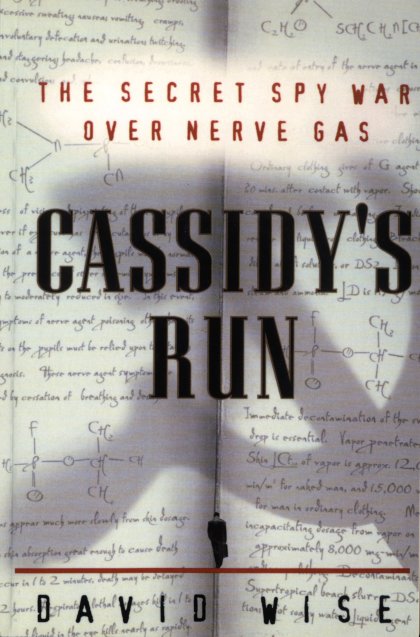
Cassidy's Run
Cassidy's Run
Couldn't load pickup availability
Collapsible content
ABOUT
Cassidy's Run is the riveting story of one of the best-kept secrets of the Cold War—an espionage operation mounted by Washington against the Soviet Union that ran for twenty-three years. At the highest levels of the government, its code name was Operation shocker.
Lured by a double agent working for the United States, ten Russian spies, including a professor at the University of Minnesota, his wife, and a classic "sleeper" spy in New York City, were sent by Moscow to penetrate America's secrets. Two FBI agents were killed, and secret formulas were passed to the Russians in a dangerous ploy that could have spurred Moscow to create the world's most powerful nerve gas.
Cassidy's Run tells this extraordinary true story for the first time, following a trail that leads from Washington to Moscow, with detours to Florida, Minnesota, and Mexico. Based on documents secret until now and scores of interviews in the United States and Russia, the book reveals that:
¸ more than 4,500 pages of classified documents, including U.S. nerve gas formulas, were passed to the Soviet Union in exchange for hundreds of thousands of dollars
¸ an "Armageddon code," a telephone call to a number in New York City, was to alert the sleeper spy to an impending nuclear attack—a warning he would transmit to the Soviets by radio signal from atop a rock in Central Park
¸ two FBI agents were killed when their plane crashed during surveillance of one of the Soviet spies as he headed for the Canadian border
¸ secret "drops" for microdots were set up by Moscow from New York to Florida to Washington
More than a cloak-and-dagger tale, Cassidy's Run is the spellbinding story of one ordinary man, Sergeant Joe Cassidy, not trained as a spy, who suddenly found himself the FBI's secret weapon in a dangerous clandestine war.
ADVANCE PRAISE FOR CASSIDY'S RUN
"Cassidy's Run shows, once again, that few writers know the ins and outs of the spy game like David Wise. . . his research is meticulous in this true story of espionage that reads like a thriller."
—Dan Rather
"The Master hsa done it again. David Wise, the best observer and chronicler of spies there is, has told another gripping story. This one comes from the cold war combat over nerve gas and is spookier than ever because it's all true."
—Jim Lehrer
STANDARD, PRIMARY, DM AND VARIANT COVERS
Standard and Primary covers are widely available through general retailers. They often have higher print runs and can be cheaper, especially during sales.
In contrast, Direct Market (DM) and variant covers are primarily sold in comic shops. DM editions tend to have more limited availability and may be more valuable to collectors.
The main differences lie in artwork style, availability, price, and collector appeal. Ultimately, the choice between standard and variant covers depends on personal preference, budget, and individual collecting goals.
PRODUCT TYPES
Comic book enthusiasts have various formats to choose from when collecting their favorite stories.
Here's a brief overview of the main types:
Omnibus
- Large, hardcover collections
- Usually contain complete runs or extensive story arcs
- Typically 800-1000+ pages
- Higher price point, often €100-€150
Oversized Hardcover (OHC)
- Similar dimensions to omnibus, but thinner
- Collect shorter runs or story arcs
- Usually 300-600 pages
- Priced between €30-€50
Hardcover (HC)
- Standard-sized hardcover books
- Collect 6-12 issues typically
- Similar dimensions to single issues, but with a hard cover
- Priced around €25-€35
Trade Paperback (TP)
- Softcover collections
- Standard comic book size
- Usually collect 4-6 issues
- Most affordable option, typically €15-€25
Other Formats
- Absolute Editions: Oversized, deluxe hardcovers (mainly DC Comics)
- Compendiums: Massive paperback collections
- Graphic Novels (OGN/GN): Original stories not previously released as single issues
The choice between these formats often depends on personal preference, budget, and collecting goals. Omnibus and OHC editions offer larger artwork and more content but at a higher price, while TPs provide a more affordable way to collect complete story arcs