

Diversified Publishing
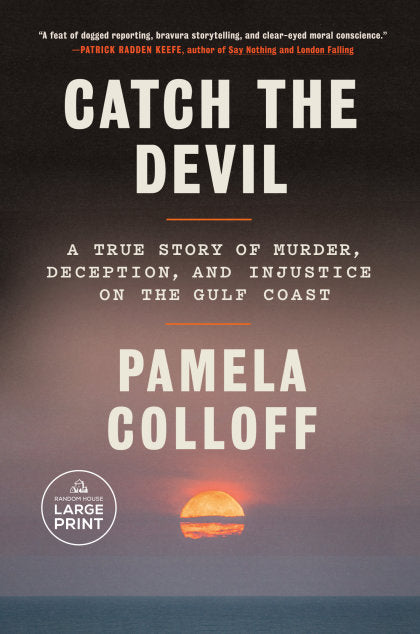
Catch the Devil
Catch the Devil
Couldn't load pickup availability
Collapsible content
ABOUT
For more than three decades, Paul Skalnik roamed the Gulf Coast lying about who he was. He passed himself off as a fighter pilot, a high-rolling oilman, a criminal defense attorney, an undercover agent, and a terminal cancer patient. In these guises he married nine women—some at the same time.
When Skalnik got caught, as he invariably did, he would run a different con. Locked up with other men awaiting trial, he claimed they confessed their crimes to him. Then he peddled those stories to prosecutors. In Pinellas County, Florida, he became a frequent witness for the state, thinking nothing of exaggerating men’s wrongdoing or implicating the innocent to help prosecutors win convictions. In return, the state rewarded him with his freedom, fueling his growing sense of invincibility. Soon he was not just committing fraud; he was preying on girls in their teens or barely into adolescence.
In 1985, Jim Dailey, a down-on-his-luck Vietnam veteran, was implicated in the murder of a fourteen-year-old girl and landed in the Pinellas County Jail with Skalnik. No forensic evidence or motive linked Dailey to the killing, but Skalnik’s account of his "confession" helped put Dailey on death row. Skalnik, meanwhile, walked free. More than three decades later, after another man took responsibility for the killing, Pamela Colloff, reporting for the New York Times Magazine and ProPublica, visited Skalnik and asked him if he would recant his testimony. He refused.
By then, Skalnik had caused untold damage: to the women and girls he exploited, to the dozens of men he helped imprison, and to Jim Dailey, who went on to receive an execution date. In this mesmerizing debut, Pamela Colloff spins a dark tale of a remorseless and brilliant liar made lethal by a system more concerned with winning convictions than finding the truth.
STANDARD, PRIMARY, DM AND VARIANT COVERS
Standard and Primary covers are widely available through general retailers. They often have higher print runs and can be cheaper, especially during sales.
In contrast, Direct Market (DM) and variant covers are primarily sold in comic shops. DM editions tend to have more limited availability and may be more valuable to collectors.
The main differences lie in artwork style, availability, price, and collector appeal. Ultimately, the choice between standard and variant covers depends on personal preference, budget, and individual collecting goals.
PRODUCT TYPES
Comic book enthusiasts have various formats to choose from when collecting their favorite stories.
Here's a brief overview of the main types:
Omnibus
- Large, hardcover collections
- Usually contain complete runs or extensive story arcs
- Typically 800-1000+ pages
- Higher price point, often €100-€150
Oversized Hardcover (OHC)
- Similar dimensions to omnibus, but thinner
- Collect shorter runs or story arcs
- Usually 300-600 pages
- Priced between €30-€50
Hardcover (HC)
- Standard-sized hardcover books
- Collect 6-12 issues typically
- Similar dimensions to single issues, but with a hard cover
- Priced around €25-€35
Trade Paperback (TP)
- Softcover collections
- Standard comic book size
- Usually collect 4-6 issues
- Most affordable option, typically €15-€25
Other Formats
- Absolute Editions: Oversized, deluxe hardcovers (mainly DC Comics)
- Compendiums: Massive paperback collections
- Graphic Novels (OGN/GN): Original stories not previously released as single issues
The choice between these formats often depends on personal preference, budget, and collecting goals. Omnibus and OHC editions offer larger artwork and more content but at a higher price, while TPs provide a more affordable way to collect complete story arcs