

Beacon Press
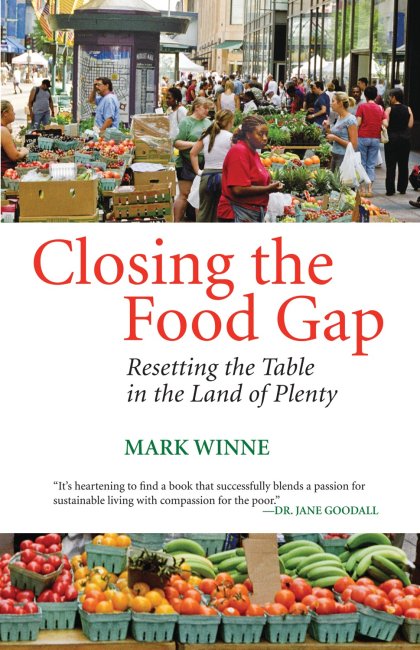
Closing the Food Gap
Closing the Food Gap
Couldn't load pickup availability
Collapsible content
ABOUT
In Closing the Food Gap, food activist and journalist Mark Winne poses questions too often overlooked in our current conversations around food: What about those people who are not financially able to make conscientious choices about where and how to get food? And in a time of rising rates of both diabetes and obesity, what can we do to make healthier foods available for everyone?
To address these questions, Winne tells the story of how America’s food gap has widened since the 1960s, when domestic poverty was “rediscovered,” and how communities have responded with a slew of strategies and methods to narrow the gap, including community gardens, food banks, and farmers’ markets. The story, however, is not only about hunger in the land of plenty and the organized efforts to reduce it; it is also about doing that work against a backdrop of ever-growing American food affluence and gastronomical expectations. With the popularity of Whole Foods and increasingly common community-supported agriculture (CSA), wherein subscribers pay a farm so they can have fresh produce regularly, the demand for fresh food is rising in one population as fast as rates of obesity and diabetes are rising in another.
Over the last three decades, Winne has found a way to connect impoverished communities experiencing these health problems with the benefits of CSAs and farmers’ markets; in Closing the Food Gap, he explains how he came to his conclusions. With tragically comic stories from his many years running a model food organization, the Hartford Food System in Connecticut, alongside fascinating profiles of activists and organizations in communities across the country, Winne addresses head-on the struggles to improve food access for all of us, regardless of income level.
STANDARD, PRIMARY, DM AND VARIANT COVERS
Standard and Primary covers are widely available through general retailers. They often have higher print runs and can be cheaper, especially during sales.
In contrast, Direct Market (DM) and variant covers are primarily sold in comic shops. DM editions tend to have more limited availability and may be more valuable to collectors.
The main differences lie in artwork style, availability, price, and collector appeal. Ultimately, the choice between standard and variant covers depends on personal preference, budget, and individual collecting goals.
PRODUCT TYPES
Comic book enthusiasts have various formats to choose from when collecting their favorite stories.
Here's a brief overview of the main types:
Omnibus
- Large, hardcover collections
- Usually contain complete runs or extensive story arcs
- Typically 800-1000+ pages
- Higher price point, often €100-€150
Oversized Hardcover (OHC)
- Similar dimensions to omnibus, but thinner
- Collect shorter runs or story arcs
- Usually 300-600 pages
- Priced between €30-€50
Hardcover (HC)
- Standard-sized hardcover books
- Collect 6-12 issues typically
- Similar dimensions to single issues, but with a hard cover
- Priced around €25-€35
Trade Paperback (TP)
- Softcover collections
- Standard comic book size
- Usually collect 4-6 issues
- Most affordable option, typically €15-€25
Other Formats
- Absolute Editions: Oversized, deluxe hardcovers (mainly DC Comics)
- Compendiums: Massive paperback collections
- Graphic Novels (OGN/GN): Original stories not previously released as single issues
The choice between these formats often depends on personal preference, budget, and collecting goals. Omnibus and OHC editions offer larger artwork and more content but at a higher price, while TPs provide a more affordable way to collect complete story arcs