

Penguin Publishing Group
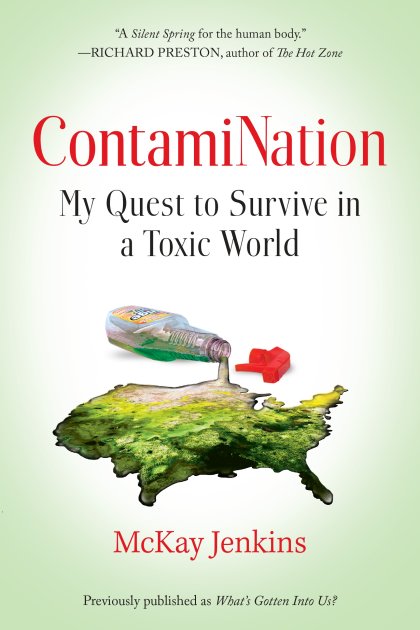
ContamiNation
ContamiNation
Couldn't load pickup availability
Collapsible content
ABOUT
A few years ago, journalism professor McKay Jenkins went in for a routine medical exam. What doctors found was not routine at all: a tumor, the size of a navel orange, was lurking in his abdomen. When Jenkins returned to the hospital to have the tumor removed, he was visited by a couple of researchers with clipboards. They had some questions for him. Odd questions. How much exposure had he had to toxic chemicals and other contaminants? Asbestos dust? Vinyl chlorine? Pesticides? A million questions, all about seemingly obscure chemicals. Jenkins, an exercise nut and an enviro-conscious, organic-garden kind of guy, suddenly realized he’d spent his life marinating in toxic stuff, from his wall-to-wall carpeting, to his dryer sheets, to his drinking water. And from the moment he left the hospital, he resolved to discover the truth about chemicals and the “healthy” levels of exposure we encounter each day as Americans.
Jenkins spent the next two years digging, exploring five frontiers of toxic exposure—the body, the home, the drinking water, the lawn, and the local box store—and asking how we allowed ourselves to get to this point. He soon learned that the giants of the chemical industry operate virtually unchecked, and a parent has almost no way of finding out what the toy her child is putting in his or her mouth is made of. Most important, though, Jenkins wanted to know what we can do to turn things around. Though toxins may be present in products we all use every day—from ant spray, perfume, and grass seed to shower curtains and, yes, baby shampoo—there are ways to lessen our exposure. ContamiNation is an eye-opening report from the front lines of consumer advocacy.
STANDARD, PRIMARY, DM AND VARIANT COVERS
Standard and Primary covers are widely available through general retailers. They often have higher print runs and can be cheaper, especially during sales.
In contrast, Direct Market (DM) and variant covers are primarily sold in comic shops. DM editions tend to have more limited availability and may be more valuable to collectors.
The main differences lie in artwork style, availability, price, and collector appeal. Ultimately, the choice between standard and variant covers depends on personal preference, budget, and individual collecting goals.
PRODUCT TYPES
Comic book enthusiasts have various formats to choose from when collecting their favorite stories.
Here's a brief overview of the main types:
Omnibus
- Large, hardcover collections
- Usually contain complete runs or extensive story arcs
- Typically 800-1000+ pages
- Higher price point, often €100-€150
Oversized Hardcover (OHC)
- Similar dimensions to omnibus, but thinner
- Collect shorter runs or story arcs
- Usually 300-600 pages
- Priced between €30-€50
Hardcover (HC)
- Standard-sized hardcover books
- Collect 6-12 issues typically
- Similar dimensions to single issues, but with a hard cover
- Priced around €25-€35
Trade Paperback (TP)
- Softcover collections
- Standard comic book size
- Usually collect 4-6 issues
- Most affordable option, typically €15-€25
Other Formats
- Absolute Editions: Oversized, deluxe hardcovers (mainly DC Comics)
- Compendiums: Massive paperback collections
- Graphic Novels (OGN/GN): Original stories not previously released as single issues
The choice between these formats often depends on personal preference, budget, and collecting goals. Omnibus and OHC editions offer larger artwork and more content but at a higher price, while TPs provide a more affordable way to collect complete story arcs