

Diversified Publishing
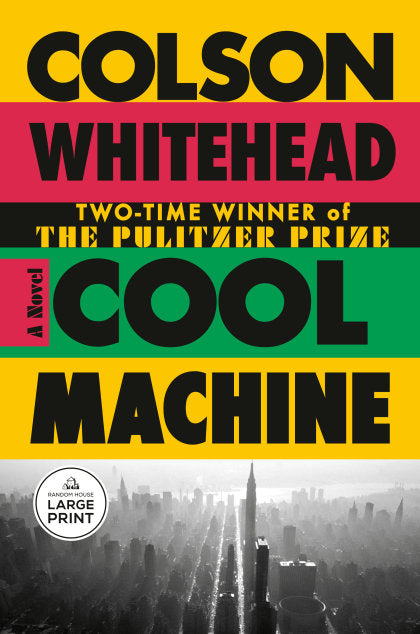
Cool Machine
Cool Machine
Couldn't load pickup availability
Collapsible content
ABOUT
1981. New York City is beginning to emerge from financial ruin and decline, energized by rampant real estate development and a Wall Street unchained by Reagan-era predatory capitalism. Up in Harlem, successful business owner/master fence Ray Carney has just been named Sterling Furniture’s Dealer of the Month. When the banks won’t give his beloved wife Elizabeth a loan for her new travel agency, however, Carney gambles on one last heist, and finds himself entangled with a legendary criminal mastermind.
1983. To some, Carney’s friend and partner in crime, Pepper, is a stone-cold sociopath. To others, a top thief with questionable people skills. Either way, he’s feeling his age in his troubled gut and his aching bones. When he takes on a bodyguard gig as a favor to Elizabeth, he’s plunged into the alien territory of the East Village art and club scene. Luckily for him, whether you’re uptown or down, everyone speaks the same language of violence—Pepper is a native speaker.
1986. Carney has always been haunted by his inability to save his cousin Freddie. Now, twenty years after Freddie’s death, he has a chance to rescue Freddie’s son from the violent forces of the city. But coming out of retirement and teaming up with Pepper again will mean risking the safety and security he’s spent decades building for his family, with only one shot to get it right.
With his usual pitch-perfect prose, Whitehead paints a portrait of a city in transition, where shimmering skyscrapers rise to the heavens as displaced people huddle in abandoned tunnels below. In a dazzling display of protean imagination, Cool Machine roves all over the city, from Windows on the World to the Meadowlands, to show that in New York, and in the lives of Whitehead’s vivid characters, it’s what’s below the surface that reveals the truth.
STANDARD, PRIMARY, DM AND VARIANT COVERS
Standard and Primary covers are widely available through general retailers. They often have higher print runs and can be cheaper, especially during sales.
In contrast, Direct Market (DM) and variant covers are primarily sold in comic shops. DM editions tend to have more limited availability and may be more valuable to collectors.
The main differences lie in artwork style, availability, price, and collector appeal. Ultimately, the choice between standard and variant covers depends on personal preference, budget, and individual collecting goals.
PRODUCT TYPES
Comic book enthusiasts have various formats to choose from when collecting their favorite stories.
Here's a brief overview of the main types:
Omnibus
- Large, hardcover collections
- Usually contain complete runs or extensive story arcs
- Typically 800-1000+ pages
- Higher price point, often €100-€150
Oversized Hardcover (OHC)
- Similar dimensions to omnibus, but thinner
- Collect shorter runs or story arcs
- Usually 300-600 pages
- Priced between €30-€50
Hardcover (HC)
- Standard-sized hardcover books
- Collect 6-12 issues typically
- Similar dimensions to single issues, but with a hard cover
- Priced around €25-€35
Trade Paperback (TP)
- Softcover collections
- Standard comic book size
- Usually collect 4-6 issues
- Most affordable option, typically €15-€25
Other Formats
- Absolute Editions: Oversized, deluxe hardcovers (mainly DC Comics)
- Compendiums: Massive paperback collections
- Graphic Novels (OGN/GN): Original stories not previously released as single issues
The choice between these formats often depends on personal preference, budget, and collecting goals. Omnibus and OHC editions offer larger artwork and more content but at a higher price, while TPs provide a more affordable way to collect complete story arcs