

Random House Publishing Group
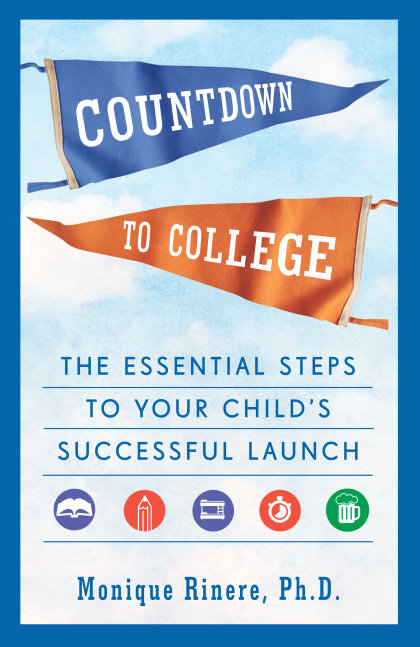
Countdown to College
Countdown to College
Couldn't load pickup availability
Collapsible content
ABOUT
Every new student grapples with making a successful transition to college—with remaining healthy, happy, grounded, and in school. Indeed, the national statistics are sobering: One in three freshmen will not come back for sophomore year, and less than 50 percent will graduate on time. A student’s adjustment is key, especially during the period starting with the lazy summer months before move-in and ending at the dizzying close of a student’s first semester. Distilling lessons and sharing stories (some cautionary, some entertaining, all helpful) from her long college advisory career, three-time Ivy League dean Monique Rinere presents a unique month-by-month road map to a college experience that is rich, rewarding, and successful for teens and parents alike. Taking parents from the moment the acceptances arrive to the end of the first college semester, her expert advice covers:
• assessing the right fit among your child’s options: who and what to ask to get the real scoop on campus and academic life
• understanding actual costs: considering hidden expenses, financial-aid and scholarship fine print, loans, and work-study opportunities
• parenting through the senior slump so that students don’t jeopardize their hard-won college spot
• talking to your child about freshman culture shock and their new freedoms around parties, food, finances, and sleep
• what your child needs to know about working with an academic advisor, interacting with professors, and creating their own community of advisors
• how to help your rising freshman create a conceptual bridge from what they are, a graduating high school senior, to what they want to be, a college alum
• time-management and class-scheduling tips to help your child pick an appropriate class (and extracurricular) load
• advice for parents facing the emptying nest: letting go of your anxieties about your child’s autonomy and seizing this opportunity to reinvent your life in new and intentional ways
“A valuable and comprehensive guide for parents of college-bound students . . . The months between high school and college are a critical time, but Dr. Monique Rinere gives you confidence that everything will be all right.”—Marvin Krislov, president, Pace University
STANDARD, PRIMARY, DM AND VARIANT COVERS
Standard and Primary covers are widely available through general retailers. They often have higher print runs and can be cheaper, especially during sales.
In contrast, Direct Market (DM) and variant covers are primarily sold in comic shops. DM editions tend to have more limited availability and may be more valuable to collectors.
The main differences lie in artwork style, availability, price, and collector appeal. Ultimately, the choice between standard and variant covers depends on personal preference, budget, and individual collecting goals.
PRODUCT TYPES
Comic book enthusiasts have various formats to choose from when collecting their favorite stories.
Here's a brief overview of the main types:
Omnibus
- Large, hardcover collections
- Usually contain complete runs or extensive story arcs
- Typically 800-1000+ pages
- Higher price point, often €100-€150
Oversized Hardcover (OHC)
- Similar dimensions to omnibus, but thinner
- Collect shorter runs or story arcs
- Usually 300-600 pages
- Priced between €30-€50
Hardcover (HC)
- Standard-sized hardcover books
- Collect 6-12 issues typically
- Similar dimensions to single issues, but with a hard cover
- Priced around €25-€35
Trade Paperback (TP)
- Softcover collections
- Standard comic book size
- Usually collect 4-6 issues
- Most affordable option, typically €15-€25
Other Formats
- Absolute Editions: Oversized, deluxe hardcovers (mainly DC Comics)
- Compendiums: Massive paperback collections
- Graphic Novels (OGN/GN): Original stories not previously released as single issues
The choice between these formats often depends on personal preference, budget, and collecting goals. Omnibus and OHC editions offer larger artwork and more content but at a higher price, while TPs provide a more affordable way to collect complete story arcs