

Random House Publishing Group
Covering
Covering
Couldn't load pickup availability
Collapsible content
ABOUT
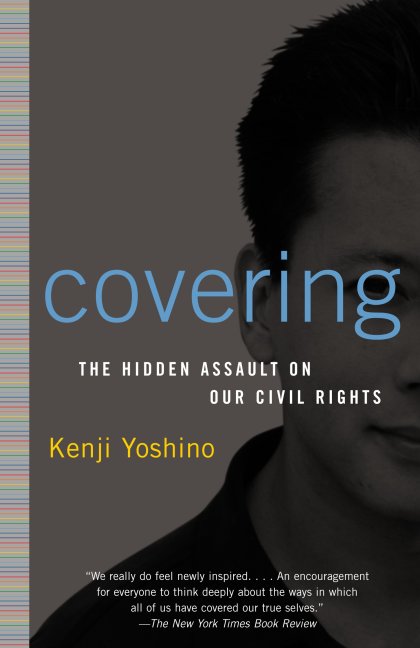
“[Kenji] Yoshino offers his personal search for authenticity as an encouragement for everyone to think deeply about the ways in which all of us have covered our true selves. . . . We really do feel newly inspired.”—The New York Times Book Review
Everyone covers. To cover is to downplay a disfavored trait so as to blend into the mainstream. Because all of us possess stigmatized attributes, we all encounter pressure to cover in our daily lives. Racial minorities are pressed to “act white” by changing their names, languages, or cultural practices. Women are told to “play like men” at work. Gays are asked not to engage in public displays of same-sex affection. The devout are instructed to minimize expressions of faith, and individuals with disabilities are urged to conceal the paraphernalia that permit them to function. Given its pervasiveness, we may experience this pressure to be a simple fact of social life.
Against conventional understanding, Kenji Yoshino argues that the work of American civil rights law will not be complete until it attends to the harms of coerced conformity. Though we have come to some consensus against penalizing people for differences based on race, sex, sexual orientation, religion, and disability, we still routinely deny equal treatment to people who refuse to downplay differences along these lines.
At the same time, Yoshino is responsive to the American exasperation with identity politics, which often seems like an endless parade of groups asking for state and social solicitude. He observes that the ubiquity of covering provides an opportunity to lift civil rights into a higher, more universal register. Since we all experience the covering demand, we can all make common cause around a new civil rights paradigm based on our desire for authenticity—a desire that brings us together rather than driving us apart.
Praise for Covering
“Yoshino argues convincingly in this book, part luminous, moving memoir, part cogent, level-headed treatise, that covering is going to become more and more a civil rights issue as the nation (and the nation’s courts) struggle with an increasingly multiethnic America.”—San Francisco Chronicle
“[A] remarkable debut . . . [Yoshino’s] sense of justice is pragmatic and infectious.”—Time Out New York
STANDARD, PRIMARY, DM AND VARIANT COVERS
Standard and Primary covers are widely available through general retailers. They often have higher print runs and can be cheaper, especially during sales.
In contrast, Direct Market (DM) and variant covers are primarily sold in comic shops. DM editions tend to have more limited availability and may be more valuable to collectors.
The main differences lie in artwork style, availability, price, and collector appeal. Ultimately, the choice between standard and variant covers depends on personal preference, budget, and individual collecting goals.
PRODUCT TYPES
Comic book enthusiasts have various formats to choose from when collecting their favorite stories.
Here's a brief overview of the main types:
Omnibus
- Large, hardcover collections
- Usually contain complete runs or extensive story arcs
- Typically 800-1000+ pages
- Higher price point, often €100-€150
Oversized Hardcover (OHC)
- Similar dimensions to omnibus, but thinner
- Collect shorter runs or story arcs
- Usually 300-600 pages
- Priced between €30-€50
Hardcover (HC)
- Standard-sized hardcover books
- Collect 6-12 issues typically
- Similar dimensions to single issues, but with a hard cover
- Priced around €25-€35
Trade Paperback (TP)
- Softcover collections
- Standard comic book size
- Usually collect 4-6 issues
- Most affordable option, typically €15-€25
Other Formats
- Absolute Editions: Oversized, deluxe hardcovers (mainly DC Comics)
- Compendiums: Massive paperback collections
- Graphic Novels (OGN/GN): Original stories not previously released as single issues
The choice between these formats often depends on personal preference, budget, and collecting goals. Omnibus and OHC editions offer larger artwork and more content but at a higher price, while TPs provide a more affordable way to collect complete story arcs