

Catapult
Craft in the Real World
Craft in the Real World
Couldn't load pickup availability
Collapsible content
ABOUT
"A significant contribution to discussions of the art of fiction and a necessary challenge to received views about whose stories are told, how they are told and for whom they are intended" (The New York Times Book Review)
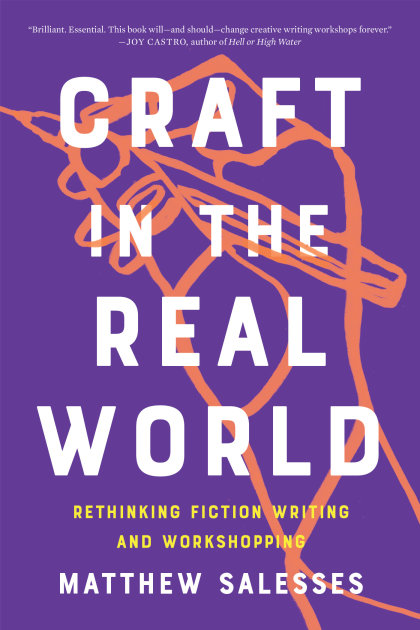
The traditional writing workshop was established with white male writers in mind; what we call craft is informed by their cultural values. In this bold and original examination of elements of writing—including plot, character, conflict, structure, and believability—and aspects of workshop—including the silenced writer and the imagined reader—Matthew Salesses asks questions to invigorate these familiar concepts. He upends Western notions of how a story must progress. How can we rethink craft, and the teaching of it, to better reach writers with diverse backgrounds? How can we invite diverse storytelling traditions into literary spaces?
Drawing from examples including One Thousand and One Nights, Curious George, Ursula K. Le Guin's A Wizard of Earthsea, and the Asian American classic No-No Boy, Salesses asks us to reimagine craft and the workshop. In the pages of exercises included here, teachers will find suggestions for building syllabi, grading, and introducing new methods to the classroom; students will find revision and editing guidance, as well as a new lens for reading their work. Salesses shows that we need to interrogate the lack of diversity at the core of published fiction: how we teach and write it. After all, as he reminds us, "When we write fiction, we write the world."
STANDARD, PRIMARY, DM AND VARIANT COVERS
Standard and Primary covers are widely available through general retailers. They often have higher print runs and can be cheaper, especially during sales.
In contrast, Direct Market (DM) and variant covers are primarily sold in comic shops. DM editions tend to have more limited availability and may be more valuable to collectors.
The main differences lie in artwork style, availability, price, and collector appeal. Ultimately, the choice between standard and variant covers depends on personal preference, budget, and individual collecting goals.
PRODUCT TYPES
Comic book enthusiasts have various formats to choose from when collecting their favorite stories.
Here's a brief overview of the main types:
Omnibus
- Large, hardcover collections
- Usually contain complete runs or extensive story arcs
- Typically 800-1000+ pages
- Higher price point, often €100-€150
Oversized Hardcover (OHC)
- Similar dimensions to omnibus, but thinner
- Collect shorter runs or story arcs
- Usually 300-600 pages
- Priced between €30-€50
Hardcover (HC)
- Standard-sized hardcover books
- Collect 6-12 issues typically
- Similar dimensions to single issues, but with a hard cover
- Priced around €25-€35
Trade Paperback (TP)
- Softcover collections
- Standard comic book size
- Usually collect 4-6 issues
- Most affordable option, typically €15-€25
Other Formats
- Absolute Editions: Oversized, deluxe hardcovers (mainly DC Comics)
- Compendiums: Massive paperback collections
- Graphic Novels (OGN/GN): Original stories not previously released as single issues
The choice between these formats often depends on personal preference, budget, and collecting goals. Omnibus and OHC editions offer larger artwork and more content but at a higher price, while TPs provide a more affordable way to collect complete story arcs