

Random House Publishing Group
Crash Course
Crash Course
Couldn't load pickup availability
Collapsible content
ABOUT
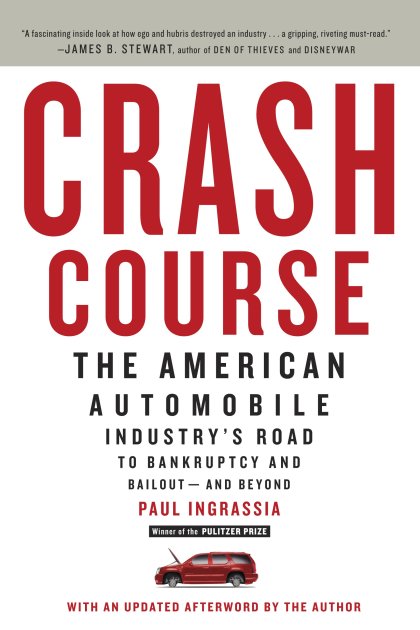
This is the epic saga of the American automobile industry’s rise and demise, a compelling story of hubris, missed opportunities, and self-inflicted wounds that culminates with the president of the United States ushering two of Detroit’s Big Three car companies—once proud symbols of prosperity—through bankruptcy. With unprecedented access, Pulitzer Prize winner Paul Ingrassia takes us from factory floors to small-town dealerships to Detroit’s boardrooms to the White House. Ingrassia answers the big questions: Was Detroit’s self-destruction inevitable? Why did Japanese automakers manage American workers better than the American companies themselves did? Complete with a new Afterword providing fresh insights into the continuing upheaval in the auto industry—the travails of Toyota, the revolving-door management and IPO at General Motors, the unexpected progress at Chrysler, and the Obama administration’s stake in Detroit’s recovery—Crash Course addresses a critical question: America bailed out GM, but who will bail out America?
With an updated Afterword by the author
Praise for Crash Course
“In order to understand just how much of a mess it was—not to mention how it got that way and how, if at all, it can be cleaned up—you really need to read Crash Course.”—The Washinton Post
“Ingrassia tells Detroit’s story with economy, vigour and restrained fury.”—The Economist
“A delightful mix of history and first-person reporting . . . Employing superb storytelling skills, Ingrassia explains in head-shaking detail the elements of a wholly avoidable collision.”—Kirkus Reviews (starred review)
STANDARD, PRIMARY, DM AND VARIANT COVERS
Standard and Primary covers are widely available through general retailers. They often have higher print runs and can be cheaper, especially during sales.
In contrast, Direct Market (DM) and variant covers are primarily sold in comic shops. DM editions tend to have more limited availability and may be more valuable to collectors.
The main differences lie in artwork style, availability, price, and collector appeal. Ultimately, the choice between standard and variant covers depends on personal preference, budget, and individual collecting goals.
PRODUCT TYPES
Comic book enthusiasts have various formats to choose from when collecting their favorite stories.
Here's a brief overview of the main types:
Omnibus
- Large, hardcover collections
- Usually contain complete runs or extensive story arcs
- Typically 800-1000+ pages
- Higher price point, often €100-€150
Oversized Hardcover (OHC)
- Similar dimensions to omnibus, but thinner
- Collect shorter runs or story arcs
- Usually 300-600 pages
- Priced between €30-€50
Hardcover (HC)
- Standard-sized hardcover books
- Collect 6-12 issues typically
- Similar dimensions to single issues, but with a hard cover
- Priced around €25-€35
Trade Paperback (TP)
- Softcover collections
- Standard comic book size
- Usually collect 4-6 issues
- Most affordable option, typically €15-€25
Other Formats
- Absolute Editions: Oversized, deluxe hardcovers (mainly DC Comics)
- Compendiums: Massive paperback collections
- Graphic Novels (OGN/GN): Original stories not previously released as single issues
The choice between these formats often depends on personal preference, budget, and collecting goals. Omnibus and OHC editions offer larger artwork and more content but at a higher price, while TPs provide a more affordable way to collect complete story arcs