

Crown
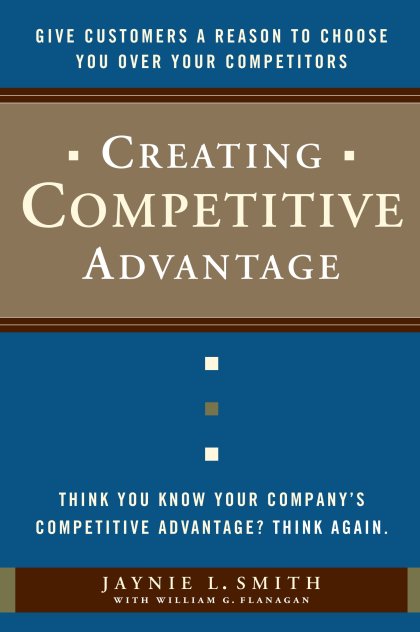
Creating Competitive Advantage
Creating Competitive Advantage
Couldn't load pickup availability
Collapsible content
ABOUT
“Ought to be mandatory reading for all entrepreneurs.”—Miami Herald
Why should I do business with you . . . and not your competitor?
Whether you are a retailer, manufacturer, distributor, or service provider, if you cannot answer this question, you are surely losing customers, clients, and market share. This eye-opening book reveals how identifying your competitive advantages (and trumpeting them to the marketplace) is the most surefire way to close deals, retain clients, and stay miles ahead of the competition.
The five fatal flaws of most companies:
• They don’t have a competitive advantage but think they do
• They have a competitive advantage but don’t know what it is—so they lower prices instead
• They know what their competitive advantage is but neglect to tell clients about it
• They mistake “strengths” for competitive advantages
• They don’t concentrate on competitive advantages when making strategic and operational decisions
The good news is that you can overcome these costly mistakes—by identifying your competitive advantages and creating new ones. In Creating Competitive Advantage, consultant, public speaker, and competitive advantage expert Jaynie Smith shows you how scores of small and large companies substantially increased their sales by focusing on their competitive advantages. When advising a CEO frustrated by his salespeople’s inability to close deals, Smith discovered that his company stayed on schedule 95 percent of the time—an achievement no one else in his industry could claim. By touting this and other competitive advantages to customers, closing rates increased by 30 percent—and so did company revenues.
Jack Welch has said, “If you don’t have a competitive advantage, don’t compete.” This straight-to-the-point book is filled with insightful stories and specific steps on how to pinpoint your competitive advantages, develop new ones, and get the message out about them.
STANDARD, PRIMARY, DM AND VARIANT COVERS
Standard and Primary covers are widely available through general retailers. They often have higher print runs and can be cheaper, especially during sales.
In contrast, Direct Market (DM) and variant covers are primarily sold in comic shops. DM editions tend to have more limited availability and may be more valuable to collectors.
The main differences lie in artwork style, availability, price, and collector appeal. Ultimately, the choice between standard and variant covers depends on personal preference, budget, and individual collecting goals.
PRODUCT TYPES
Comic book enthusiasts have various formats to choose from when collecting their favorite stories.
Here's a brief overview of the main types:
Omnibus
- Large, hardcover collections
- Usually contain complete runs or extensive story arcs
- Typically 800-1000+ pages
- Higher price point, often €100-€150
Oversized Hardcover (OHC)
- Similar dimensions to omnibus, but thinner
- Collect shorter runs or story arcs
- Usually 300-600 pages
- Priced between €30-€50
Hardcover (HC)
- Standard-sized hardcover books
- Collect 6-12 issues typically
- Similar dimensions to single issues, but with a hard cover
- Priced around €25-€35
Trade Paperback (TP)
- Softcover collections
- Standard comic book size
- Usually collect 4-6 issues
- Most affordable option, typically €15-€25
Other Formats
- Absolute Editions: Oversized, deluxe hardcovers (mainly DC Comics)
- Compendiums: Massive paperback collections
- Graphic Novels (OGN/GN): Original stories not previously released as single issues
The choice between these formats often depends on personal preference, budget, and collecting goals. Omnibus and OHC editions offer larger artwork and more content but at a higher price, while TPs provide a more affordable way to collect complete story arcs