

Catapult
Creating the Future
Creating the Future
Couldn't load pickup availability
Collapsible content
ABOUT
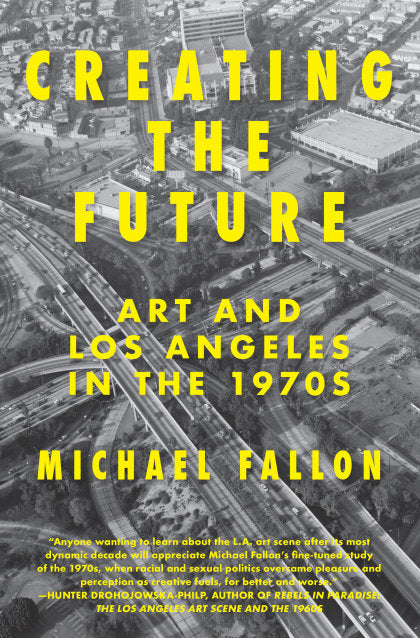
The passing of those fashionable 1960s–era icons, in fact, allowed the development of a chaotic array of outlandish and independent voices, marginalized communities, and energetic, sometimes bizarre visions that thrived during the stagnant 1970s. Fallon's narrative describes and celebrates, through twelve thematically arranged chapters, the wide range of intriguing artists and the world—not just the objects—they created. He reveals the deeper, more culturally dynamic truth about a significant moment in American art history, presenting an alternative story of stubborn creativity in the face of widespread ignorance and misapprehension among the art cognoscenti, who dismissed the 1970s in Los Angeles as a time of dissipation and decline.
Coming into being right before their eyes was an ardent local feminist art movement, which had lasting influence on the direction of art across the nation; an emerging Chicano Art movement, spreading Chicano murals across Los Angeles and to other major cities; a new and more modern vision for the role and look of public art; a slow consolidation of local street sensibilities, car fetishism, gang and punk aesthetics into the earliest version of what would later become the "Lowbrow" art movement; the subversive co–opting, in full view of Pop Art, of the values, aesthetics, and imagery of Tinseltown by a number of young and innovative local artists who would go on to greater national renown; and a number of independent voices who, lacking the support structures of an art movement or artist cohort, pursued their brilliant artistic visions in near–isolation.
Despite the lack of attention, these artists would later reemerge as visionary signposts to many later trends in art. Their work would prove more interesting, more lastingly influential, and vastly more important than ever imagined or expected by those who saw it or even by those who created it in 1970's Los Angeles. Creating the Future is a visionary work that seeks to recapture this important decade and its influence on today's generation of artists.
STANDARD, PRIMARY, DM AND VARIANT COVERS
Standard and Primary covers are widely available through general retailers. They often have higher print runs and can be cheaper, especially during sales.
In contrast, Direct Market (DM) and variant covers are primarily sold in comic shops. DM editions tend to have more limited availability and may be more valuable to collectors.
The main differences lie in artwork style, availability, price, and collector appeal. Ultimately, the choice between standard and variant covers depends on personal preference, budget, and individual collecting goals.
PRODUCT TYPES
Comic book enthusiasts have various formats to choose from when collecting their favorite stories.
Here's a brief overview of the main types:
Omnibus
- Large, hardcover collections
- Usually contain complete runs or extensive story arcs
- Typically 800-1000+ pages
- Higher price point, often €100-€150
Oversized Hardcover (OHC)
- Similar dimensions to omnibus, but thinner
- Collect shorter runs or story arcs
- Usually 300-600 pages
- Priced between €30-€50
Hardcover (HC)
- Standard-sized hardcover books
- Collect 6-12 issues typically
- Similar dimensions to single issues, but with a hard cover
- Priced around €25-€35
Trade Paperback (TP)
- Softcover collections
- Standard comic book size
- Usually collect 4-6 issues
- Most affordable option, typically €15-€25
Other Formats
- Absolute Editions: Oversized, deluxe hardcovers (mainly DC Comics)
- Compendiums: Massive paperback collections
- Graphic Novels (OGN/GN): Original stories not previously released as single issues
The choice between these formats often depends on personal preference, budget, and collecting goals. Omnibus and OHC editions offer larger artwork and more content but at a higher price, while TPs provide a more affordable way to collect complete story arcs