

Beacon Press
Demystifying Shariah
Demystifying Shariah
Couldn't load pickup availability
Collapsible content
ABOUT
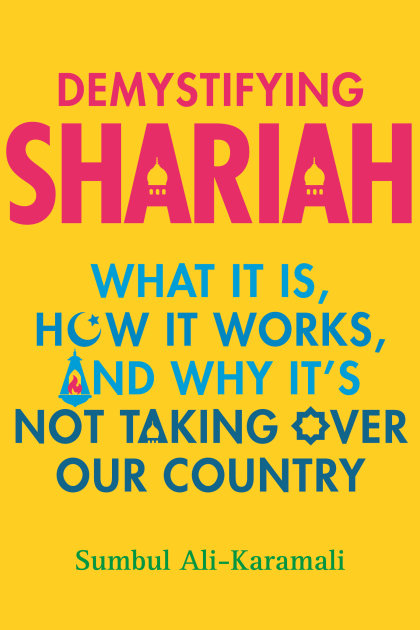
Through scare tactics and deliberate misinformation campaigns, anti-Muslim propagandists insist wrongly that shariah is a draconian and oppressive Islamic law that all Muslims must abide by. They circulate horror stories, encouraging Americans to fear the “takeover of shariah” law in America and even mounting “anti-shariah protests” . . . . with zero evidence that shariah has taken over any part of our country. (That’s because it hasn’t.) It would be almost funny if it weren’t so terrifyingly wrong—as puzzling as if Americans suddenly began protesting the Martian occupation of Earth.
Demystifying Shariah explains that shariah is not one set of punitive rules or even law the way we think of law—rigid and enforceable—but religious rules and recommendations that provide Muslims with guidance in various aspects of life. Sumbul Ali-Karamali draws on scholarship and her degree in Islamic law to explain shariah in an accessible, engaging narrative style—its various meanings, how it developed, and how the shariah-based legal system operated for over a thousand years. She explains what shariah means not only in the abstract but in the daily lives of Muslims. She discusses modern calls for shariah, what they mean, and whether shariah is the law of the land anywhere in the world. She also describes the key lies and misunderstandings about shariah circulating in our public discourse, and why so many of them are nonsensical.
This engaging guide is intended to introduce you to the basic principles, goals, and general development of shariah and to answer questions like: How do Muslims engage with shariah? What does shariah have to do with our Constitution? What does shariah have to do with the way the world looks like today? And why do we all—Muslims or not—need to care?
STANDARD, PRIMARY, DM AND VARIANT COVERS
Standard and Primary covers are widely available through general retailers. They often have higher print runs and can be cheaper, especially during sales.
In contrast, Direct Market (DM) and variant covers are primarily sold in comic shops. DM editions tend to have more limited availability and may be more valuable to collectors.
The main differences lie in artwork style, availability, price, and collector appeal. Ultimately, the choice between standard and variant covers depends on personal preference, budget, and individual collecting goals.
PRODUCT TYPES
Comic book enthusiasts have various formats to choose from when collecting their favorite stories.
Here's a brief overview of the main types:
Omnibus
- Large, hardcover collections
- Usually contain complete runs or extensive story arcs
- Typically 800-1000+ pages
- Higher price point, often €100-€150
Oversized Hardcover (OHC)
- Similar dimensions to omnibus, but thinner
- Collect shorter runs or story arcs
- Usually 300-600 pages
- Priced between €30-€50
Hardcover (HC)
- Standard-sized hardcover books
- Collect 6-12 issues typically
- Similar dimensions to single issues, but with a hard cover
- Priced around €25-€35
Trade Paperback (TP)
- Softcover collections
- Standard comic book size
- Usually collect 4-6 issues
- Most affordable option, typically €15-€25
Other Formats
- Absolute Editions: Oversized, deluxe hardcovers (mainly DC Comics)
- Compendiums: Massive paperback collections
- Graphic Novels (OGN/GN): Original stories not previously released as single issues
The choice between these formats often depends on personal preference, budget, and collecting goals. Omnibus and OHC editions offer larger artwork and more content but at a higher price, while TPs provide a more affordable way to collect complete story arcs