

Clarkson Potter/Ten Speed
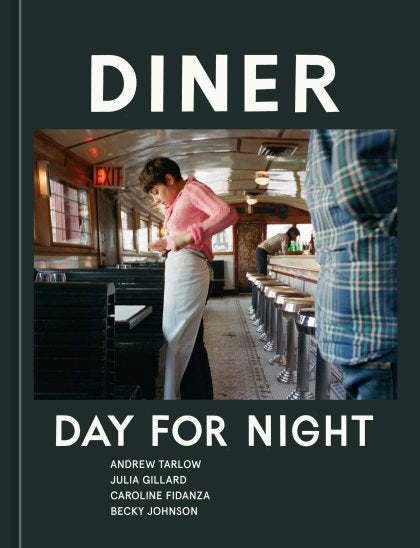
Diner
Diner
Couldn't load pickup availability
Collapsible content
ABOUT
“We don’t go to restaurants for the food. We go for the people who make the food and for the people who serve the food. We eat out to help us feel good feelings about the people we eat with. Restaurants create memories. Every page in Diner captures those feelings.”—Carla Lalli Music, author of That Sounds So Good and Where Cooking Begins
On New Year’s Eve 1998, Andrew Tarlow, along with Mark Firth, opened Diner out of a repurposed dining car under the Williamsburg Bridge in Brooklyn. Within the decade, it single-handedly became one of the city’s most influential restaurants, giving birth to a Brooklyn mini-empire—including Marlow & Sons, Roman’s, and Achilles Heel—and an ethos of community, sustainability, and eating local. In Diner: Day for Night, Tarlow takes us back to the restaurant that brought the farm-to-table movement to Brooklyn.
Featuring evocative photography, Diner: Day for Night is a poetic homage to a lively place as the day shifts from morning to night, both intimate and welcoming. Get a glimpse of Diner’s opening chef Caroline's first impression of Diner co-founders Andrew and Mark, the chaotic opening night that everyone turned up for, and the many faces that have come and gone throughout the years. The recipes are based upon the food so many have come to love and are built around each season, from Asparagus with Tahini Sauce and Wilted Frilly Mustard Greens and Green Tomatoes with Mozzarella, Basil, and Green Coriander to Lamb Belly with Potatoes and Tomatoes and Vanilla Pots De Crème.
In Diner: Day for Night, Tarlow invites readers to his first major culinary foray, giving us inspiration for creating delicious, celebratory food at home.
STANDARD, PRIMARY, DM AND VARIANT COVERS
Standard and Primary covers are widely available through general retailers. They often have higher print runs and can be cheaper, especially during sales.
In contrast, Direct Market (DM) and variant covers are primarily sold in comic shops. DM editions tend to have more limited availability and may be more valuable to collectors.
The main differences lie in artwork style, availability, price, and collector appeal. Ultimately, the choice between standard and variant covers depends on personal preference, budget, and individual collecting goals.
PRODUCT TYPES
Comic book enthusiasts have various formats to choose from when collecting their favorite stories.
Here's a brief overview of the main types:
Omnibus
- Large, hardcover collections
- Usually contain complete runs or extensive story arcs
- Typically 800-1000+ pages
- Higher price point, often €100-€150
Oversized Hardcover (OHC)
- Similar dimensions to omnibus, but thinner
- Collect shorter runs or story arcs
- Usually 300-600 pages
- Priced between €30-€50
Hardcover (HC)
- Standard-sized hardcover books
- Collect 6-12 issues typically
- Similar dimensions to single issues, but with a hard cover
- Priced around €25-€35
Trade Paperback (TP)
- Softcover collections
- Standard comic book size
- Usually collect 4-6 issues
- Most affordable option, typically €15-€25
Other Formats
- Absolute Editions: Oversized, deluxe hardcovers (mainly DC Comics)
- Compendiums: Massive paperback collections
- Graphic Novels (OGN/GN): Original stories not previously released as single issues
The choice between these formats often depends on personal preference, budget, and collecting goals. Omnibus and OHC editions offer larger artwork and more content but at a higher price, while TPs provide a more affordable way to collect complete story arcs