

Random House Worlds
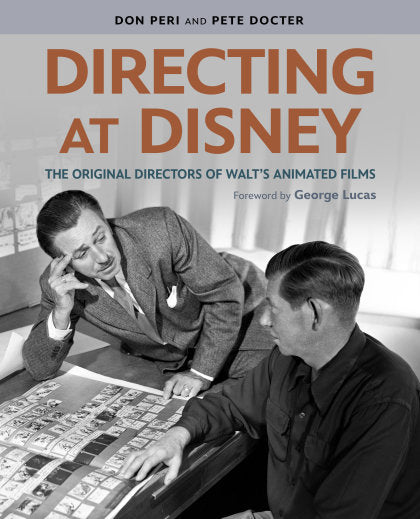
Directing at Disney
Directing at Disney
Couldn't load pickup availability
Collapsible content
ABOUT
When the very first animated films appeared, there were no directors. With no actors, sets, costumes, or sound, what appeared onscreen was simply decided and drawn by an animator. Since early films were usually made by only one or two artists, there was little need for planning. Organization was loose. When Walt Disney started animating on shorts and advertising projects in Kansas City, Missouri, he followed that process, along with fellow artist and friend Ub Iwerks.
Walt found that his strength was in story and character. He began writing outlines, describing what would appear scene by scene. Soon the text was accompanied by a sketch previsualizing the layout, giving all animators working on a film a clear vision of how their parts fit into the whole. Ultimately, Walt shepherded stories from their inception through every revision and gag. He approved every camera angle. He dictated what happened in every shot, sometimes every frame, obsessing over every detail. While not credited as such onscreen, Walt was the first Disney director.
As the Disney studio grew, Walt organically evolved the role of director, reflecting the amount of trust he had in those he worked with, his interest in a specific project, and what other projects he had on his plate. Walt expected his directors to follow his instructions—and to improve the work at every turn.
Directing at Disney: The Original Directors of Walt's Animated Films offers the little-known history behind Walt's foundational directors, such as Wilfred Jackson, Clyde Geronimi, and Dave Hand. These talents directed some of the most beloved films in existence—Snow White and Seven Dwarfs, Pinocchio, Peter Pan, and One Hundred and One Dalmatians—yet virtually no one has heard of them . . . until now.
STANDARD, PRIMARY, DM AND VARIANT COVERS
Standard and Primary covers are widely available through general retailers. They often have higher print runs and can be cheaper, especially during sales.
In contrast, Direct Market (DM) and variant covers are primarily sold in comic shops. DM editions tend to have more limited availability and may be more valuable to collectors.
The main differences lie in artwork style, availability, price, and collector appeal. Ultimately, the choice between standard and variant covers depends on personal preference, budget, and individual collecting goals.
PRODUCT TYPES
Comic book enthusiasts have various formats to choose from when collecting their favorite stories.
Here's a brief overview of the main types:
Omnibus
- Large, hardcover collections
- Usually contain complete runs or extensive story arcs
- Typically 800-1000+ pages
- Higher price point, often €100-€150
Oversized Hardcover (OHC)
- Similar dimensions to omnibus, but thinner
- Collect shorter runs or story arcs
- Usually 300-600 pages
- Priced between €30-€50
Hardcover (HC)
- Standard-sized hardcover books
- Collect 6-12 issues typically
- Similar dimensions to single issues, but with a hard cover
- Priced around €25-€35
Trade Paperback (TP)
- Softcover collections
- Standard comic book size
- Usually collect 4-6 issues
- Most affordable option, typically €15-€25
Other Formats
- Absolute Editions: Oversized, deluxe hardcovers (mainly DC Comics)
- Compendiums: Massive paperback collections
- Graphic Novels (OGN/GN): Original stories not previously released as single issues
The choice between these formats often depends on personal preference, budget, and collecting goals. Omnibus and OHC editions offer larger artwork and more content but at a higher price, while TPs provide a more affordable way to collect complete story arcs