

Crown
Don't Kill the Birthday Girl
Don't Kill the Birthday Girl
Couldn't load pickup availability
Collapsible content
ABOUT
A beautifully written and darkly funny journey through the world of the allergic.
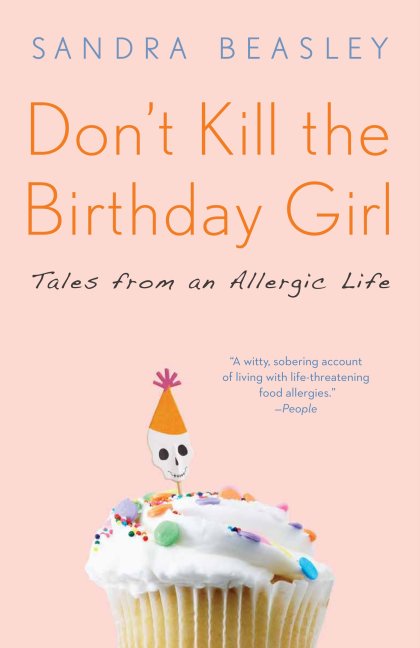
Like twelve million other Americans, Sandra Beasley suffers from food allergies. Her allergies—severe and lifelong—include dairy, egg, soy, beef, shrimp, pine nuts, cucumbers, cantaloupe, honeydew, mango, macadamias, pistachios, cashews, swordfish, and mustard. Add to that mold, dust, grass and tree pollen, cigarette smoke, dogs, rabbits, horses, and wool, and it’s no wonder Sandra felt she had to live her life as “Allergy Girl.” When butter is deadly and eggs can make your throat swell shut, cupcakes and other treats of childhood are out of the question—and so Sandra’s mother used to warn guests against a toxic, frosting-tinged kiss with “Don’t kill the birthday girl!”
It may seem that such a person is “not really designed to survive,” as one blunt nutritionist declared while visiting Sandra’s fourth-grade class. But Sandra has not only survived, she’s thrived—now an essayist, editor, and award-winning poet, she has learned to navigate a world in which danger can lurk in an unassuming corn chip. Don’t Kill the Birthday Girl is her story.
With candor, wit, and a journalist’s curiosity, Sandra draws on her own experiences while covering the scientific, cultural, and sociological terrain of allergies. She explains exactly what an allergy is, describes surviving a family reunion in heart-of-Texas beef country with her vegetarian sister, delves into how being allergic has affected her romantic relationships, exposes the dark side of Benadryl, explains how parents can work with schools to protect their allergic children, and details how people with allergies should advocate for themselves in a restaurant.
A compelling mix of memoir, cultural history, and science, Don’t Kill the Birthday Girl is mandatory reading for the millions of families navigating the world of allergies—and a not-to-be-missed literary treat for the rest of us.
STANDARD, PRIMARY, DM AND VARIANT COVERS
Standard and Primary covers are widely available through general retailers. They often have higher print runs and can be cheaper, especially during sales.
In contrast, Direct Market (DM) and variant covers are primarily sold in comic shops. DM editions tend to have more limited availability and may be more valuable to collectors.
The main differences lie in artwork style, availability, price, and collector appeal. Ultimately, the choice between standard and variant covers depends on personal preference, budget, and individual collecting goals.
PRODUCT TYPES
Comic book enthusiasts have various formats to choose from when collecting their favorite stories.
Here's a brief overview of the main types:
Omnibus
- Large, hardcover collections
- Usually contain complete runs or extensive story arcs
- Typically 800-1000+ pages
- Higher price point, often €100-€150
Oversized Hardcover (OHC)
- Similar dimensions to omnibus, but thinner
- Collect shorter runs or story arcs
- Usually 300-600 pages
- Priced between €30-€50
Hardcover (HC)
- Standard-sized hardcover books
- Collect 6-12 issues typically
- Similar dimensions to single issues, but with a hard cover
- Priced around €25-€35
Trade Paperback (TP)
- Softcover collections
- Standard comic book size
- Usually collect 4-6 issues
- Most affordable option, typically €15-€25
Other Formats
- Absolute Editions: Oversized, deluxe hardcovers (mainly DC Comics)
- Compendiums: Massive paperback collections
- Graphic Novels (OGN/GN): Original stories not previously released as single issues
The choice between these formats often depends on personal preference, budget, and collecting goals. Omnibus and OHC editions offer larger artwork and more content but at a higher price, while TPs provide a more affordable way to collect complete story arcs