

Astra Publishing House
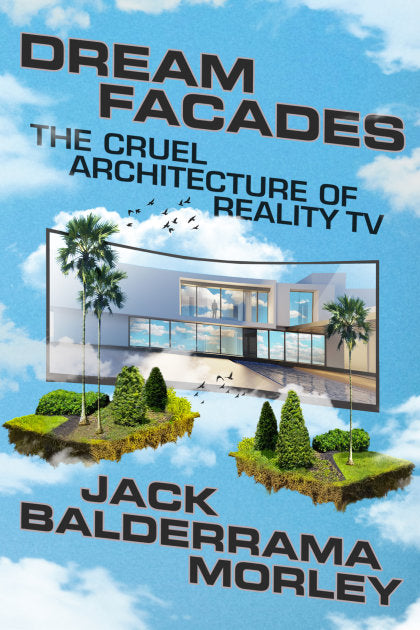
Dream Facades
Dream Facades
Couldn't load pickup availability
Collapsible content
ABOUT
People like reality TV. There’s been a lot written about the cult of celebrity, how this "reality" angle draws us in through a mix of voyeurism and relatability. But when we look at the houses on these shows, what are we seeing? Predominantly, multi-million-dollar single-family homes in areas that forcibly removed minority groups and mimic the style of a whitewashed age. Why do we watch and covet these conservative homes, while professing to want lives unbound by heteronormative patriarchy and outside of suburban fantasia?
Jack posits two main theories: that our relationships with these shows (and social media) have conflated our physical dwellings with the spaces projected onto and projected out from our screens to create a ‘physical-digital hybrid home’ that we see as representative of our actual home; and that what we actually covet when we covet these houses is safety and security, not the specifics of the styles being sold.
Dream Facades focuses on seven reality TV shows: Selling Sunset; The Kardashians; The Real World; The Bachelor; Trading Spaces; The Real Housewives of Atlanta; and Fire Island, and their specific associated architectural style. Morley takes us through reality TV’s labyrinthine properties to illuminate what makes us covet these spaces and devour these shows, and what that says about America, ourselves, and the future of design.
STANDARD, PRIMARY, DM AND VARIANT COVERS
Standard and Primary covers are widely available through general retailers. They often have higher print runs and can be cheaper, especially during sales.
In contrast, Direct Market (DM) and variant covers are primarily sold in comic shops. DM editions tend to have more limited availability and may be more valuable to collectors.
The main differences lie in artwork style, availability, price, and collector appeal. Ultimately, the choice between standard and variant covers depends on personal preference, budget, and individual collecting goals.
PRODUCT TYPES
Comic book enthusiasts have various formats to choose from when collecting their favorite stories.
Here's a brief overview of the main types:
Omnibus
- Large, hardcover collections
- Usually contain complete runs or extensive story arcs
- Typically 800-1000+ pages
- Higher price point, often €100-€150
Oversized Hardcover (OHC)
- Similar dimensions to omnibus, but thinner
- Collect shorter runs or story arcs
- Usually 300-600 pages
- Priced between €30-€50
Hardcover (HC)
- Standard-sized hardcover books
- Collect 6-12 issues typically
- Similar dimensions to single issues, but with a hard cover
- Priced around €25-€35
Trade Paperback (TP)
- Softcover collections
- Standard comic book size
- Usually collect 4-6 issues
- Most affordable option, typically €15-€25
Other Formats
- Absolute Editions: Oversized, deluxe hardcovers (mainly DC Comics)
- Compendiums: Massive paperback collections
- Graphic Novels (OGN/GN): Original stories not previously released as single issues
The choice between these formats often depends on personal preference, budget, and collecting goals. Omnibus and OHC editions offer larger artwork and more content but at a higher price, while TPs provide a more affordable way to collect complete story arcs