

Random House Publishing Group
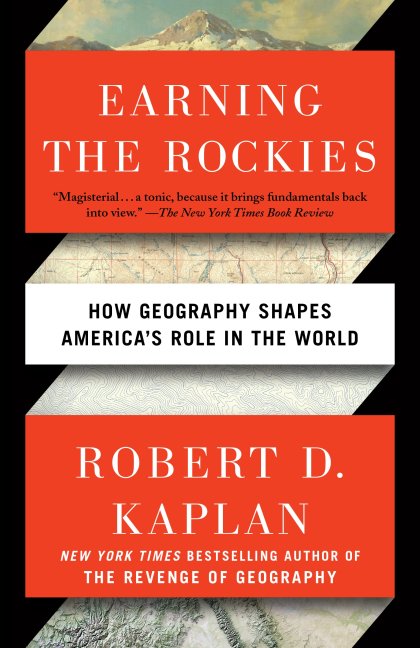
Earning the Rockies
Earning the Rockies
Couldn't load pickup availability
Collapsible content
ABOUT
Book Club Pick for Now Read This, from PBS NewsHour and The New York Times • “There is more insight here into the Age of Trump than in bushels of political-horse-race journalism.”—The New York Times Book Review (Editors’ Choice)
At a time when there is little consensus about who we are and what we should be doing with our power overseas, a return to the elemental truths of the American landscape is urgently needed. In Earning the Rockies, New York Times bestselling author Robert D. Kaplan undertakes a cross-country journey, traversing a rich and varied landscape that still remains the primary source of American power. Traveling west, in the same direction as the pioneers, Kaplan witnesses both prosperity and decline, and reexamines the history of westward expansion in a new light: as a story not just of genocide and individualism but also of communalism and a respect for the limits of a water-starved terrain. Concluding at the edge of the Pacific Ocean with a gripping description of an anarchic world, Earning the Rockies shows how America’s foreign policy response ought to be rooted in its own geographical situation.
Praise for Earning the Rockies
“Unflinchingly honest . . . a lens-changing vision of America’s role in the world . . . a jewel of a book that lights the path ahead.”—Secretary of Defense James Mattis
“A sui generis writer . . . America’s East Coast establishment has only one Robert Kaplan, someone as fluently knowledgeable about the Balkans, Iraq, Central Asia and West Africa as he is about Ohio and Wyoming.”—Financial Times
“Kaplan has pursued stories in places as remote as Yemen and Outer Mongolia. In Earning the Rockies, he visits a place almost as remote to many Americans: these United States. . . . The author’s point is a good one: America is formed, in part, by a geographic setting that is both sanctuary and watchtower.”—The Wall Street Journal
“A brilliant reminder of the impact of America’s geography on its strategy. . . . Kaplan’s latest contribution should be required reading.”—Henry A. Kissinger
“A text both evocative and provocative for readers who like to think … In his final sections, Kaplan discusses in scholarly but accessible detail the significant role that America has played and must play in this shuddering world.”—Kirkus Reviews
STANDARD, PRIMARY, DM AND VARIANT COVERS
Standard and Primary covers are widely available through general retailers. They often have higher print runs and can be cheaper, especially during sales.
In contrast, Direct Market (DM) and variant covers are primarily sold in comic shops. DM editions tend to have more limited availability and may be more valuable to collectors.
The main differences lie in artwork style, availability, price, and collector appeal. Ultimately, the choice between standard and variant covers depends on personal preference, budget, and individual collecting goals.
PRODUCT TYPES
Comic book enthusiasts have various formats to choose from when collecting their favorite stories.
Here's a brief overview of the main types:
Omnibus
- Large, hardcover collections
- Usually contain complete runs or extensive story arcs
- Typically 800-1000+ pages
- Higher price point, often €100-€150
Oversized Hardcover (OHC)
- Similar dimensions to omnibus, but thinner
- Collect shorter runs or story arcs
- Usually 300-600 pages
- Priced between €30-€50
Hardcover (HC)
- Standard-sized hardcover books
- Collect 6-12 issues typically
- Similar dimensions to single issues, but with a hard cover
- Priced around €25-€35
Trade Paperback (TP)
- Softcover collections
- Standard comic book size
- Usually collect 4-6 issues
- Most affordable option, typically €15-€25
Other Formats
- Absolute Editions: Oversized, deluxe hardcovers (mainly DC Comics)
- Compendiums: Massive paperback collections
- Graphic Novels (OGN/GN): Original stories not previously released as single issues
The choice between these formats often depends on personal preference, budget, and collecting goals. Omnibus and OHC editions offer larger artwork and more content but at a higher price, while TPs provide a more affordable way to collect complete story arcs