

Penguin Publishing Group
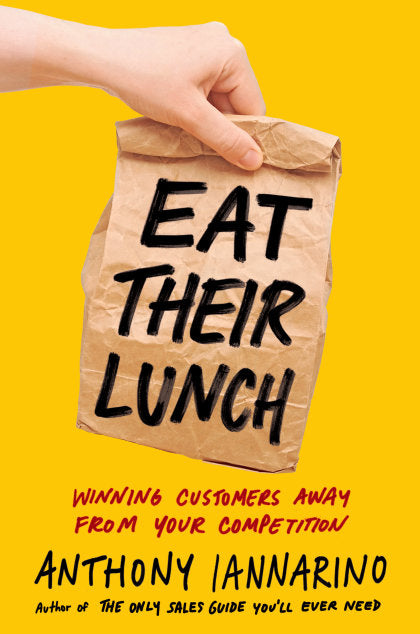
Eat Their Lunch
Eat Their Lunch
Couldn't load pickup availability
Collapsible content
ABOUT
Like it or not, sales is often a zero-sum game: Your win is someone else's loss. Most salespeople work in mature, overcrowded industries, your offerings perceived (often unfairly) as commodities. Growth requires taking market share from your competitors, while they try to do the same to you. How else can you grow 12 percent a year in an industry that's only growing by 3 percent?
It's not easy for any salesperson to execute a competitive displacement--or, in other words, "eat their lunch." You might think this requires a bloodthirsty "whatever it takes" attitude, but that's the opposite of what works. If you act like a Mafia don, you only make yourself difficult to trust and impossible to see as a long-term partner. Instead, this book shows you how to find and maintain a long-term competitive advantage by taking steps like:
Your competitors may be tough, but with the strategies you'll discover in this book, you'll soon be eating their lunch.
STANDARD, PRIMARY, DM AND VARIANT COVERS
Standard and Primary covers are widely available through general retailers. They often have higher print runs and can be cheaper, especially during sales.
In contrast, Direct Market (DM) and variant covers are primarily sold in comic shops. DM editions tend to have more limited availability and may be more valuable to collectors.
The main differences lie in artwork style, availability, price, and collector appeal. Ultimately, the choice between standard and variant covers depends on personal preference, budget, and individual collecting goals.
PRODUCT TYPES
Comic book enthusiasts have various formats to choose from when collecting their favorite stories.
Here's a brief overview of the main types:
Omnibus
- Large, hardcover collections
- Usually contain complete runs or extensive story arcs
- Typically 800-1000+ pages
- Higher price point, often €100-€150
Oversized Hardcover (OHC)
- Similar dimensions to omnibus, but thinner
- Collect shorter runs or story arcs
- Usually 300-600 pages
- Priced between €30-€50
Hardcover (HC)
- Standard-sized hardcover books
- Collect 6-12 issues typically
- Similar dimensions to single issues, but with a hard cover
- Priced around €25-€35
Trade Paperback (TP)
- Softcover collections
- Standard comic book size
- Usually collect 4-6 issues
- Most affordable option, typically €15-€25
Other Formats
- Absolute Editions: Oversized, deluxe hardcovers (mainly DC Comics)
- Compendiums: Massive paperback collections
- Graphic Novels (OGN/GN): Original stories not previously released as single issues
The choice between these formats often depends on personal preference, budget, and collecting goals. Omnibus and OHC editions offer larger artwork and more content but at a higher price, while TPs provide a more affordable way to collect complete story arcs