

Clarkson Potter/Ten Speed
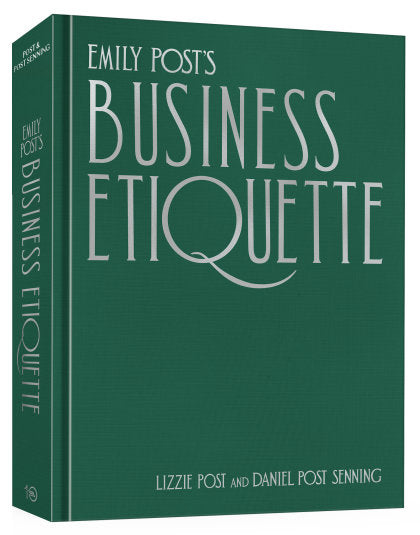
Emily Post's Business Etiquette
Emily Post's Business Etiquette
Couldn't load pickup availability
Collapsible content
ABOUT
No matter the industry or the position, business is built on relationships—and at the heart of all good relationships is good etiquette. Understanding good business etiquette skills and how to apply them to your job and your professional relationships is key to building a successful career. Work environments and the relationships we experience in them are complex. It’s important to know how to identify what type of environment and relationships you’re in and how to manage and adjust your behavior accordingly.
Emily Post’s Business Etiquette includes thoughtful guidance for all workplace scenarios with sample language, examples and exercises, charts, and key takeaways from every chapter. Professionals—jobseekers and new hires through those in the C-suite—are given the dos and don’ts of traditional workplace etiquette, from knowing when to send a thank-you note to successfully navigating a business meal, along with modern advice addressing common post-pandemic concerns such as video conferencing norms, workflow management, and communication tools for remote work. Some topics you’ll find in Emily Post’s Business Etiquette:
- The importance of owning your professional image and understanding what it communicates in a multitude of settings.
- Written communication skills for everything from messaging channels such as Slack and Teams to internal and external emails.
- Seating charts for meetings, networking dinners, and more.
- A gender-free guide to attire for all occasions.
- Tips for offering constructive criticism and feedback effectively.
- Expectations for host and guest roles, both virtual and in person.
With helpful new insight into understanding generational differences, gender-neutral manners, and embracing diversity, Emily Post’s Business Etiquette is the perfect resource for those looking to get ahead in their careers and establish their professional identities.
STANDARD, PRIMARY, DM AND VARIANT COVERS
Standard and Primary covers are widely available through general retailers. They often have higher print runs and can be cheaper, especially during sales.
In contrast, Direct Market (DM) and variant covers are primarily sold in comic shops. DM editions tend to have more limited availability and may be more valuable to collectors.
The main differences lie in artwork style, availability, price, and collector appeal. Ultimately, the choice between standard and variant covers depends on personal preference, budget, and individual collecting goals.
PRODUCT TYPES
Comic book enthusiasts have various formats to choose from when collecting their favorite stories.
Here's a brief overview of the main types:
Omnibus
- Large, hardcover collections
- Usually contain complete runs or extensive story arcs
- Typically 800-1000+ pages
- Higher price point, often €100-€150
Oversized Hardcover (OHC)
- Similar dimensions to omnibus, but thinner
- Collect shorter runs or story arcs
- Usually 300-600 pages
- Priced between €30-€50
Hardcover (HC)
- Standard-sized hardcover books
- Collect 6-12 issues typically
- Similar dimensions to single issues, but with a hard cover
- Priced around €25-€35
Trade Paperback (TP)
- Softcover collections
- Standard comic book size
- Usually collect 4-6 issues
- Most affordable option, typically €15-€25
Other Formats
- Absolute Editions: Oversized, deluxe hardcovers (mainly DC Comics)
- Compendiums: Massive paperback collections
- Graphic Novels (OGN/GN): Original stories not previously released as single issues
The choice between these formats often depends on personal preference, budget, and collecting goals. Omnibus and OHC editions offer larger artwork and more content but at a higher price, while TPs provide a more affordable way to collect complete story arcs