

Penguin Young Readers Group
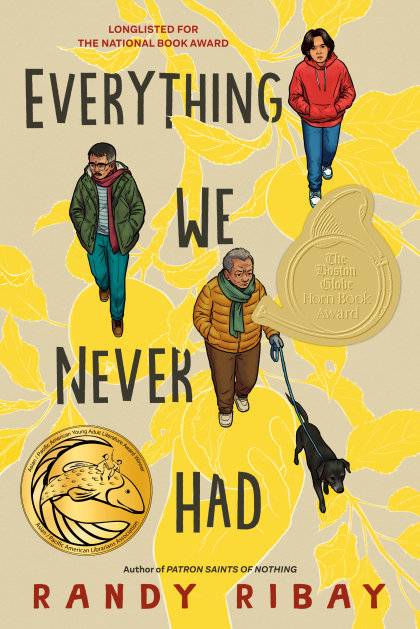
Everything We Never Had
Everything We Never Had
Couldn't load pickup availability
Collapsible content
ABOUT
Watsonville, 1930. Francisco Maghabol barely ekes out a living in the fields of California. As he spends what little money he earns at dance halls and faces increasing violence from white men in town, Francisco wonders if he should’ve never left the Philippines.
Stockton, 1965. Between school days full of prejudice from white students and teachers and night shifts working at his aunt’s restaurant, Emil refuses to follow in the footsteps of his labor organizer father, Francisco. He’s going to make it in this country no matter what or who he has to leave behind.
Denver, 1983. Chris is determined to prove that his overbearing father, Emil, can’t control him. However, when a missed assignment on “ancestral history” sends Chris off the football team and into the library, he discovers a desire to know more about Filipino history―even if his father dismisses his interest as un-American and unimportant.
Philadelphia, 2020. Enzo struggles to keep his anxiety in check as a global pandemic breaks out and his abrasive grandfather moves in. While tensions are high between his dad and his lolo, Enzo’s daily walks with Lolo Emil have him wondering if maybe he can help bridge their decades-long rift.
Told in multiple perspectives, Everything We Never Had unfolds like a beautifully crafted nesting doll, where each Maghabol boy forges his own path amid heavy family and societal expectations, passing down his flaws, values, and virtues to the next generation, until it’s up to Enzo to see how he can braid all these strands and men together.
STANDARD, PRIMARY, DM AND VARIANT COVERS
Standard and Primary covers are widely available through general retailers. They often have higher print runs and can be cheaper, especially during sales.
In contrast, Direct Market (DM) and variant covers are primarily sold in comic shops. DM editions tend to have more limited availability and may be more valuable to collectors.
The main differences lie in artwork style, availability, price, and collector appeal. Ultimately, the choice between standard and variant covers depends on personal preference, budget, and individual collecting goals.
PRODUCT TYPES
Comic book enthusiasts have various formats to choose from when collecting their favorite stories.
Here's a brief overview of the main types:
Omnibus
- Large, hardcover collections
- Usually contain complete runs or extensive story arcs
- Typically 800-1000+ pages
- Higher price point, often €100-€150
Oversized Hardcover (OHC)
- Similar dimensions to omnibus, but thinner
- Collect shorter runs or story arcs
- Usually 300-600 pages
- Priced between €30-€50
Hardcover (HC)
- Standard-sized hardcover books
- Collect 6-12 issues typically
- Similar dimensions to single issues, but with a hard cover
- Priced around €25-€35
Trade Paperback (TP)
- Softcover collections
- Standard comic book size
- Usually collect 4-6 issues
- Most affordable option, typically €15-€25
Other Formats
- Absolute Editions: Oversized, deluxe hardcovers (mainly DC Comics)
- Compendiums: Massive paperback collections
- Graphic Novels (OGN/GN): Original stories not previously released as single issues
The choice between these formats often depends on personal preference, budget, and collecting goals. Omnibus and OHC editions offer larger artwork and more content but at a higher price, while TPs provide a more affordable way to collect complete story arcs