

Penguin Publishing Group
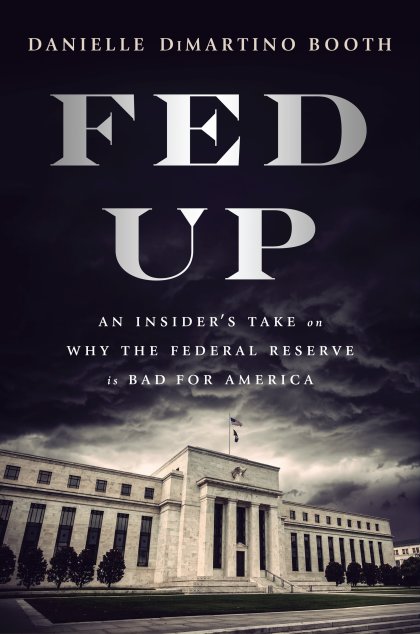
Fed Up
Fed Up
Couldn't load pickup availability
Collapsible content
ABOUT
After correctly predicting the housing crash of 2008 and quitting her high-ranking Wall Street job, Danielle DiMartino Booth was surprised to find herself recruited as an analyst at the Federal Reserve Bank of Dallas, one of the regional centers of our complicated and widely misunderstood Federal Reserve System. She was shocked to discover just how much tunnel vision, arrogance, liberal dogma, and abuse of power drove the core policies of the Fed.
DiMartino Booth found a cabal of unelected academics who made decisions without the slightest understanding of the real world, just a slavish devotion to their theoretical models. Over the next nine years, she and her boss, Richard Fisher, tried to speak up about the dangers of Fed policies such as quantitative easing and deeply depressed interest rates. But as she puts it, “In a world rendered unsafe by banks that were too big to fail, we came to understand that the Fed was simply too big to fight.”
Now DiMartino Booth explains what really happened to our economy after the fateful date of December 8, 2008, when the Federal Open Market Committee approved a grand and unprecedented experiment: lowering interest rates to zero and flooding America with easy money. As she feared, millions of individuals, small businesses, and major corporations made rational choices that didn’t line up with the Fed’s “wealth effect” models. The result: eight years and counting of a sluggish “recovery” that barely feels like a recovery at all.
While easy money has kept Wall Street and the wealthy afloat and thriving, Main Street isn’t doing so well. Nearly half of men eighteen to thirty-four live with their parents, the highest level since the end of the Great Depression. Incomes are barely increasing for anyone not in the top ten percent of earners. And for those approaching or already in retirement, extremely low interest rates have caused their savings to stagnate. Millions have been left vulnerable and afraid.
Perhaps worst of all, when the next financial crisis arrives, the Fed will have no tools left for managing the panic that ensues. And then what?
DiMartino Booth pulls no punches in this exposé of the officials who run the Fed and the toxic culture they created. She blends her firsthand experiences with what she’s learned from dozens of high-powered market players, reams of financial data, and Fed documents such as transcripts of FOMC meetings.
Whether you’ve been suspicious of the Fed for decades or barely know anything about it, as DiMartino Booth writes, “Every American must understand this extraordinarily powerful institution and how it affects his or her everyday life, and fight back.”
STANDARD, PRIMARY, DM AND VARIANT COVERS
Standard and Primary covers are widely available through general retailers. They often have higher print runs and can be cheaper, especially during sales.
In contrast, Direct Market (DM) and variant covers are primarily sold in comic shops. DM editions tend to have more limited availability and may be more valuable to collectors.
The main differences lie in artwork style, availability, price, and collector appeal. Ultimately, the choice between standard and variant covers depends on personal preference, budget, and individual collecting goals.
PRODUCT TYPES
Comic book enthusiasts have various formats to choose from when collecting their favorite stories.
Here's a brief overview of the main types:
Omnibus
- Large, hardcover collections
- Usually contain complete runs or extensive story arcs
- Typically 800-1000+ pages
- Higher price point, often €100-€150
Oversized Hardcover (OHC)
- Similar dimensions to omnibus, but thinner
- Collect shorter runs or story arcs
- Usually 300-600 pages
- Priced between €30-€50
Hardcover (HC)
- Standard-sized hardcover books
- Collect 6-12 issues typically
- Similar dimensions to single issues, but with a hard cover
- Priced around €25-€35
Trade Paperback (TP)
- Softcover collections
- Standard comic book size
- Usually collect 4-6 issues
- Most affordable option, typically €15-€25
Other Formats
- Absolute Editions: Oversized, deluxe hardcovers (mainly DC Comics)
- Compendiums: Massive paperback collections
- Graphic Novels (OGN/GN): Original stories not previously released as single issues
The choice between these formats often depends on personal preference, budget, and collecting goals. Omnibus and OHC editions offer larger artwork and more content but at a higher price, while TPs provide a more affordable way to collect complete story arcs