

Random House Publishing Group
FM
FM
Couldn't load pickup availability
Collapsible content
ABOUT
–from FM
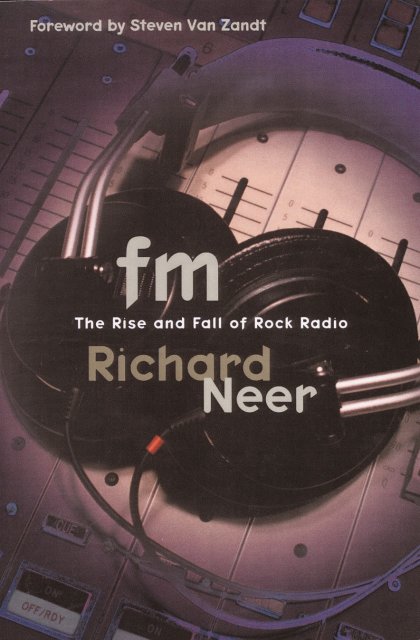
As a young man, Richard Neer dreamed of landing a job at WNEW in New York–one of the revolutionary FM stations across the country that were changing the face of radio by rejecting strict formatting and letting disc jockeys play whatever they wanted. He felt that when he got there, he’d have made the big time. Little did he know he’d have shaped rock history as well.
FM: The Rise and Fall of Rock Radio chronicles the birth, growth, and death of free-form rock-and-roll radio through the stories of the movement’s flagship stations. In the late sixties and early seventies–at stations like KSAN in San Francisco, WBCN in Boston, WMMR in Philadelphia, KMET in Los Angeles, WNEW, and others–disc jockeys became the gatekeepers, critics, and gurus of new music. Jocks like Scott Muni, Vin Scelsa, Jonathan Schwartz, and Neer developed loyal followings and had incredible influence on their listeners and on the early careers of artists such as Bruce Springsteen, Genesis, the Cars, and many others.
Full of fascinating firsthand stories, FM documents the commodification of an iconoclastic phenomenon, revealing how counterculture was coopted and consumed by the mainstream. Richard Neer was an eyewitness to, and participant in, this history. FM is the tale of his exhilarating ride.
STANDARD, PRIMARY, DM AND VARIANT COVERS
Standard and Primary covers are widely available through general retailers. They often have higher print runs and can be cheaper, especially during sales.
In contrast, Direct Market (DM) and variant covers are primarily sold in comic shops. DM editions tend to have more limited availability and may be more valuable to collectors.
The main differences lie in artwork style, availability, price, and collector appeal. Ultimately, the choice between standard and variant covers depends on personal preference, budget, and individual collecting goals.
PRODUCT TYPES
Comic book enthusiasts have various formats to choose from when collecting their favorite stories.
Here's a brief overview of the main types:
Omnibus
- Large, hardcover collections
- Usually contain complete runs or extensive story arcs
- Typically 800-1000+ pages
- Higher price point, often €100-€150
Oversized Hardcover (OHC)
- Similar dimensions to omnibus, but thinner
- Collect shorter runs or story arcs
- Usually 300-600 pages
- Priced between €30-€50
Hardcover (HC)
- Standard-sized hardcover books
- Collect 6-12 issues typically
- Similar dimensions to single issues, but with a hard cover
- Priced around €25-€35
Trade Paperback (TP)
- Softcover collections
- Standard comic book size
- Usually collect 4-6 issues
- Most affordable option, typically €15-€25
Other Formats
- Absolute Editions: Oversized, deluxe hardcovers (mainly DC Comics)
- Compendiums: Massive paperback collections
- Graphic Novels (OGN/GN): Original stories not previously released as single issues
The choice between these formats often depends on personal preference, budget, and collecting goals. Omnibus and OHC editions offer larger artwork and more content but at a higher price, while TPs provide a more affordable way to collect complete story arcs