

Penguin Publishing Group
Food Storage for Self-Sufficiency and Survival
Food Storage for Self-Sufficiency and Survival
Couldn't load pickup availability
Collapsible content
ABOUT
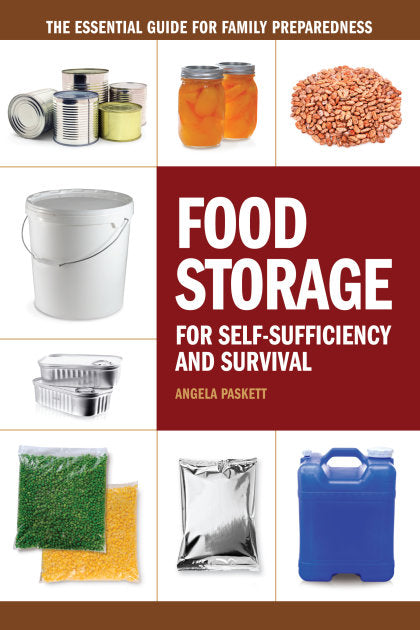
With all the uncertainty in the world today, there is peace in preparing. In an emergency, you don't want to depend on a grocery store or government agency to feed your family. Storing food assures your family's self-sufficiency year-round and benefits your budget when you plan correctly.
This in-depth, nuts-and-bolts guide to storing food teaches you a variety of food storage methods that you can customize to meet your family's unique circumstances including family size, tastes, ages, health concerns, income, and living conditions. This is not a generic manual on stocking dehydrated meals that have ten-year shelf lives. It's the guide to storing foods your family loves so you can eat well no matter what challenges life throws at you.
Inside you'll find:
• Food-storage options for 72-hour emergency kits, short-term emergencies and long-term survival.
• Food-storage planning methods that incorporate the foods and meals your family loves.
• Tips for how to maintain balance and variety in your food storage.
• Budget-friendly ways to purchase food for storage.
• Easy and practical ideas for cooking with food in storage so nothing expires or goes to waste.
• Organization and storage methods for easy food store maintenance.
• Water storage and purification methods.
• Canning, freezing and dehydrating methods to preserve food you produce at home.
Storing food gives you the freedom to stretch your income in tight-budget months, pack quick meals for short-notice trips, and create healthy meals without constantly going to the grocery store. Plus your stored food is available if you do experience an emergency power outage, natural disaster, long-term illness or job loss. Let this guide help you start building your self-sufficiency and food storage today.
STANDARD, PRIMARY, DM AND VARIANT COVERS
Standard and Primary covers are widely available through general retailers. They often have higher print runs and can be cheaper, especially during sales.
In contrast, Direct Market (DM) and variant covers are primarily sold in comic shops. DM editions tend to have more limited availability and may be more valuable to collectors.
The main differences lie in artwork style, availability, price, and collector appeal. Ultimately, the choice between standard and variant covers depends on personal preference, budget, and individual collecting goals.
PRODUCT TYPES
Comic book enthusiasts have various formats to choose from when collecting their favorite stories.
Here's a brief overview of the main types:
Omnibus
- Large, hardcover collections
- Usually contain complete runs or extensive story arcs
- Typically 800-1000+ pages
- Higher price point, often €100-€150
Oversized Hardcover (OHC)
- Similar dimensions to omnibus, but thinner
- Collect shorter runs or story arcs
- Usually 300-600 pages
- Priced between €30-€50
Hardcover (HC)
- Standard-sized hardcover books
- Collect 6-12 issues typically
- Similar dimensions to single issues, but with a hard cover
- Priced around €25-€35
Trade Paperback (TP)
- Softcover collections
- Standard comic book size
- Usually collect 4-6 issues
- Most affordable option, typically €15-€25
Other Formats
- Absolute Editions: Oversized, deluxe hardcovers (mainly DC Comics)
- Compendiums: Massive paperback collections
- Graphic Novels (OGN/GN): Original stories not previously released as single issues
The choice between these formats often depends on personal preference, budget, and collecting goals. Omnibus and OHC editions offer larger artwork and more content but at a higher price, while TPs provide a more affordable way to collect complete story arcs