

Penguin Publishing Group
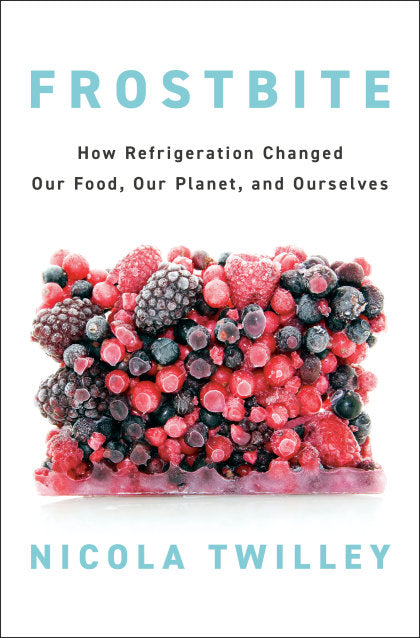
Frostbite
Frostbite
Couldn't load pickup availability
Collapsible content
ABOUT
"Engrossing...hard to put down." — The New York Times Book Review
“Frostbite is a perfectly executed cold fusion of science, history, and literary verve . . . as a fellow nonfiction writer, I bow down. This is how it's done.” — Mary Roach, author of Fuzz and Stiff
An engaging and far-reaching exploration of refrigeration, tracing its evolution from scientific mystery to globe-spanning infrastructure, and an essential investigation into how it has remade our entire relationship with food—for better and for worse
How often do we open the fridge or peer into the freezer with the expectation that we’ll find something fresh and ready to eat? It’s an everyday act—but just a century ago, eating food that had been refrigerated was cause for both fear and excitement. The introduction of artificial refrigeration overturned millennia of dietary history, launching a new chapter in human nutrition. We could now overcome not just rot, but seasonality and geography. Tomatoes in January? Avocados in Shanghai? All possible.
In Frostbite, New Yorker contributor and cohost of the award-winning podcast Gastropod Nicola Twilley takes readers on a tour of the cold chain from farm to fridge, visiting off-the-beaten-path landmarks such as Missouri’s subterranean cheese caves, the banana-ripening rooms of New York City, and the vast refrigerated tanks that store the nation’s orange juice reserves. Today, nearly three-quarters of everything on the average American plate is processed, shipped, stored, and sold under refrigeration. It’s impossible to make sense of our food system without understanding the all-but-invisible network of thermal control that underpins it. Twilley’s eye-opening book is the first to reveal the transformative impact refrigeration has had on our health and our guts; our farms, tables, kitchens, and cities; global economics and politics; and even our environment.
In the developed world, we’ve reaped the benefits of refrigeration for more than a century, but the costs are catching up with us. We’ve eroded our connection to our food and redefined what “fresh” means. More important, refrigeration is one of the leading contributors to climate change. As the developing world races to build a US-style cold chain, Twilley asks: Can we reduce our dependence on refrigeration? Should we? A deeply researched and reported, original, and entertaining dive into the most important invention in the history of food and drink, Frostbite makes the case for a recalibration of our relationship with the fridge—and how our future might depend on it.
STANDARD, PRIMARY, DM AND VARIANT COVERS
Standard and Primary covers are widely available through general retailers. They often have higher print runs and can be cheaper, especially during sales.
In contrast, Direct Market (DM) and variant covers are primarily sold in comic shops. DM editions tend to have more limited availability and may be more valuable to collectors.
The main differences lie in artwork style, availability, price, and collector appeal. Ultimately, the choice between standard and variant covers depends on personal preference, budget, and individual collecting goals.
PRODUCT TYPES
Comic book enthusiasts have various formats to choose from when collecting their favorite stories.
Here's a brief overview of the main types:
Omnibus
- Large, hardcover collections
- Usually contain complete runs or extensive story arcs
- Typically 800-1000+ pages
- Higher price point, often €100-€150
Oversized Hardcover (OHC)
- Similar dimensions to omnibus, but thinner
- Collect shorter runs or story arcs
- Usually 300-600 pages
- Priced between €30-€50
Hardcover (HC)
- Standard-sized hardcover books
- Collect 6-12 issues typically
- Similar dimensions to single issues, but with a hard cover
- Priced around €25-€35
Trade Paperback (TP)
- Softcover collections
- Standard comic book size
- Usually collect 4-6 issues
- Most affordable option, typically €15-€25
Other Formats
- Absolute Editions: Oversized, deluxe hardcovers (mainly DC Comics)
- Compendiums: Massive paperback collections
- Graphic Novels (OGN/GN): Original stories not previously released as single issues
The choice between these formats often depends on personal preference, budget, and collecting goals. Omnibus and OHC editions offer larger artwork and more content but at a higher price, while TPs provide a more affordable way to collect complete story arcs