

Penguin Publishing Group
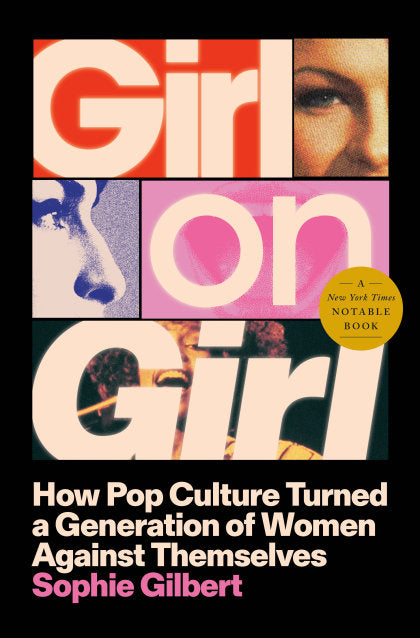
Girl on Girl
Girl on Girl
Couldn't load pickup availability
Collapsible content
ABOUT
“Searing… rigorously researched but never stuffy… Gilbert has compiled perhaps the first comprehensive examination of turn-of-the-millennium mainstream, cool-kid trends and ephemera, and how they were largely molded by those in power to sell a generation of girls and young women reality-warping lies.” —The New York Times
“So clear-eyed that it’s startling." —The Washington Post
“Entertaining and even energizing, transforming a dismal history into something like a rallying cry.” —The Boston Globe
From Atlantic critic and Pulitzer Prize finalist Sophie Gilbert, a blazing critique of early aughts pop culture
What happened to feminism in the twenty-first century? This question feels increasingly urgent in a moment of cultural and legislative backlash, when widespread uncertainty about the movement’s power, focus, and currency threatens decades of progress.
Sophie Gilbert identifies an inflection point in the late 1990s and early 2000s, when the energy of third-wave and “riot grrrl” feminism collapsed into a regressive period of hyper-objectification, sexualization, and infantilization. Mining the darker side of nostalgia, Gilbert trains her keen analytic eye on the most revealing cultural objects of the era, across music, film, television, fashion, tabloid journalism, and more. What she recounts is harrowing, from the leering gaze of the paparazzi to the gleeful cruelty of early reality TV and a burgeoning internet culture vicious toward women in the spotlight and damaging for those who weren’t. Gilbert tracks many of the period’s dominant themes back to the rise of internet porn, which gained widespread influence as it began to pervade our collective consciousness.
The result is a devastating portrait of a time when a distinctly American blend of excess, materialism, and power worship collided with the culture’s reactionary, puritanical, and chauvinistic currents. Amid a collective reconsideration of the way women are treated in public, Girl on Girl is a blistering indictment of the matrix of misogyny that undergirded the cultural production of the early twenty-first century, and continues to shape our world today.
STANDARD, PRIMARY, DM AND VARIANT COVERS
Standard and Primary covers are widely available through general retailers. They often have higher print runs and can be cheaper, especially during sales.
In contrast, Direct Market (DM) and variant covers are primarily sold in comic shops. DM editions tend to have more limited availability and may be more valuable to collectors.
The main differences lie in artwork style, availability, price, and collector appeal. Ultimately, the choice between standard and variant covers depends on personal preference, budget, and individual collecting goals.
PRODUCT TYPES
Comic book enthusiasts have various formats to choose from when collecting their favorite stories.
Here's a brief overview of the main types:
Omnibus
- Large, hardcover collections
- Usually contain complete runs or extensive story arcs
- Typically 800-1000+ pages
- Higher price point, often €100-€150
Oversized Hardcover (OHC)
- Similar dimensions to omnibus, but thinner
- Collect shorter runs or story arcs
- Usually 300-600 pages
- Priced between €30-€50
Hardcover (HC)
- Standard-sized hardcover books
- Collect 6-12 issues typically
- Similar dimensions to single issues, but with a hard cover
- Priced around €25-€35
Trade Paperback (TP)
- Softcover collections
- Standard comic book size
- Usually collect 4-6 issues
- Most affordable option, typically €15-€25
Other Formats
- Absolute Editions: Oversized, deluxe hardcovers (mainly DC Comics)
- Compendiums: Massive paperback collections
- Graphic Novels (OGN/GN): Original stories not previously released as single issues
The choice between these formats often depends on personal preference, budget, and collecting goals. Omnibus and OHC editions offer larger artwork and more content but at a higher price, while TPs provide a more affordable way to collect complete story arcs