

Penguin Publishing Group
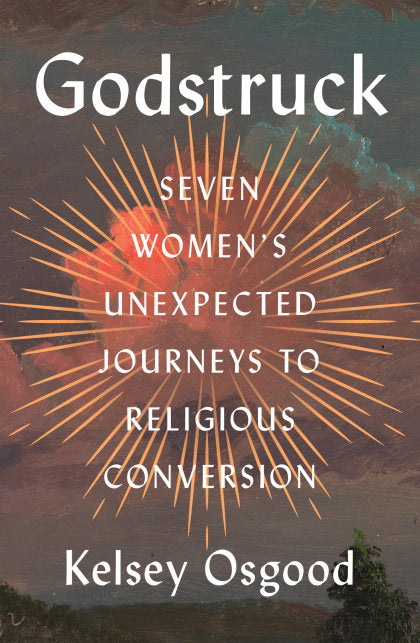
Godstruck
Godstruck
Couldn't load pickup availability
Collapsible content
ABOUT
“A lyrical, philosophically astute account . . . Godstruck is an affirming [tale] about the value of understanding ourselves as part of a wider community of seekers: a community that, in asking the big questions about God, the universe—everything—is also doing the most important work of being human.” —The Wall Street Journal
A candid, thought-provoking exploration of contemporary women’s experiences of religious conversion and the relationship between faith and fulfillment in our time
Religious involvement has been declining in the West for decades—and, though men have historically outnumbered women among the disaffiliated in the U.S., a greater share of the young adults leaving religion today are women. A young, secular Kelsey Osgood would have been surprised to hear that she would be among those moving in the opposite direction. And yet, after the conversion to Orthodox Judaism that transformed her life, she began to wonder about the other contemporary women who, like her, had been startled to find a home in organized religion.
In Godstruck, she profiles six other converts—some raised firmly atheist, others agnostic or religious—navigating independent paths to religious devotion. From Angela, a data-driven writer and journalist who finds herself drawn to Quaker meetings, to Hana, whose conversion to Islam leads her halfway around the world, to Christina, whose Amish faith transforms her relationship to modernity, these women’s unexpected revelations introduce them to new and sometimes radically different ways of living. Along the way, Osgood charts a fascinating course through a wide range of cultural references—from Saint Augustine, Simone Weil, and Tolstoy to desert hermits, Alcoholics Anonymous, and contemporary feminism—to explore some of our attempts to understand and cope with the mysteries of life and the human condition.
Driven by a profound curiosity and anchored by intimate reporting, Godstruck is a provocative, insightful, and refreshingly nuanced exploration of both the joys and the challenges of faith that reveals what these seekers can teach all of us about modern life and our own searches for meaning.
STANDARD, PRIMARY, DM AND VARIANT COVERS
Standard and Primary covers are widely available through general retailers. They often have higher print runs and can be cheaper, especially during sales.
In contrast, Direct Market (DM) and variant covers are primarily sold in comic shops. DM editions tend to have more limited availability and may be more valuable to collectors.
The main differences lie in artwork style, availability, price, and collector appeal. Ultimately, the choice between standard and variant covers depends on personal preference, budget, and individual collecting goals.
PRODUCT TYPES
Comic book enthusiasts have various formats to choose from when collecting their favorite stories.
Here's a brief overview of the main types:
Omnibus
- Large, hardcover collections
- Usually contain complete runs or extensive story arcs
- Typically 800-1000+ pages
- Higher price point, often €100-€150
Oversized Hardcover (OHC)
- Similar dimensions to omnibus, but thinner
- Collect shorter runs or story arcs
- Usually 300-600 pages
- Priced between €30-€50
Hardcover (HC)
- Standard-sized hardcover books
- Collect 6-12 issues typically
- Similar dimensions to single issues, but with a hard cover
- Priced around €25-€35
Trade Paperback (TP)
- Softcover collections
- Standard comic book size
- Usually collect 4-6 issues
- Most affordable option, typically €15-€25
Other Formats
- Absolute Editions: Oversized, deluxe hardcovers (mainly DC Comics)
- Compendiums: Massive paperback collections
- Graphic Novels (OGN/GN): Original stories not previously released as single issues
The choice between these formats often depends on personal preference, budget, and collecting goals. Omnibus and OHC editions offer larger artwork and more content but at a higher price, while TPs provide a more affordable way to collect complete story arcs