

Random House Publishing Group
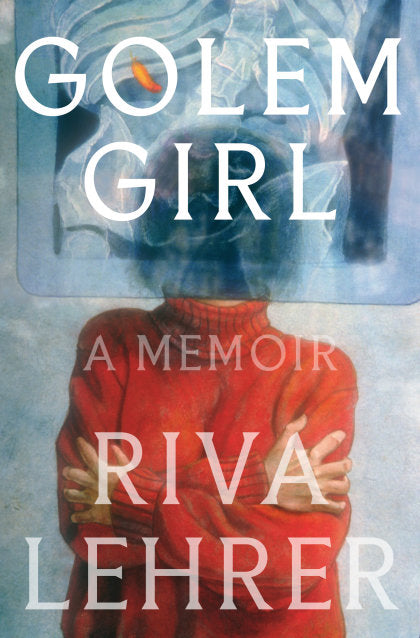
Golem Girl
Golem Girl
Couldn't load pickup availability
Collapsible content
ABOUT
“Golem Girl is luminous; a profound portrait of the artist as a young—and mature—woman; an unflinching social history of disability over the last six decades; and a hymn to life, love, family, and spirit.”—David Mitchell, author of Cloud Atlas
WINNER OF THE BARBELLION PRIZE • FINALIST FOR THE NATIONAL BOOK CRITICS CIRCLE AWARD FOR AUTOBIOGRAPHY • NAMED ONE OF THE BEST BOOKS OF THE YEAR BY KIRKUS REVIEWS
What do we sacrifice in the pursuit of normalcy? And what becomes possible when we embrace monstrosity? Can we envision a world that sees impossible creatures?
In 1958, amongst the children born with spina bifida is Riva Lehrer. At the time, most such children are not expected to survive. Her parents and doctors are determined to "fix" her, sending the message over and over again that she is broken. That she will never have a job, a romantic relationship, or an independent life. Enduring countless medical interventions, Riva tries her best to be a good girl and a good patient in the quest to be cured.
Everything changes when, as an adult, Riva is invited to join a group of artists, writers, and performers who are building Disability Culture. Their work is daring, edgy, funny, and dark—it rejects tropes that define disabled people as pathetic, frightening, or worthless. They insist that disability is an opportunity for creativity and resistance. Emboldened, Riva asks if she can paint their portraits—inventing an intimate and collaborative process that will transform the way she sees herself, others, and the world. Each portrait story begins to transform the myths she’s been told her whole life about her body, her sexuality, and other measures of normal.
Written with the vivid, cinematic prose of a visual artist, and the love and playfulness that defines all of Riva's work, Golem Girl is an extraordinary story of tenacity and creativity. With the author's magnificent portraits featured throughout, this memoir invites us to stretch ourselves toward a world where bodies flow between all possible forms of what it is to be human.
“Not your typical memoir about ‘what it’s like to be disabled in a non-disabled world’ . . . Lehrer tells her stories about becoming the monster she was always meant to be: glorious, defiant, unbound, and voracious. Read it!”—Alice Wong, founder and director, Disability Visibility Project
STANDARD, PRIMARY, DM AND VARIANT COVERS
Standard and Primary covers are widely available through general retailers. They often have higher print runs and can be cheaper, especially during sales.
In contrast, Direct Market (DM) and variant covers are primarily sold in comic shops. DM editions tend to have more limited availability and may be more valuable to collectors.
The main differences lie in artwork style, availability, price, and collector appeal. Ultimately, the choice between standard and variant covers depends on personal preference, budget, and individual collecting goals.
PRODUCT TYPES
Comic book enthusiasts have various formats to choose from when collecting their favorite stories.
Here's a brief overview of the main types:
Omnibus
- Large, hardcover collections
- Usually contain complete runs or extensive story arcs
- Typically 800-1000+ pages
- Higher price point, often €100-€150
Oversized Hardcover (OHC)
- Similar dimensions to omnibus, but thinner
- Collect shorter runs or story arcs
- Usually 300-600 pages
- Priced between €30-€50
Hardcover (HC)
- Standard-sized hardcover books
- Collect 6-12 issues typically
- Similar dimensions to single issues, but with a hard cover
- Priced around €25-€35
Trade Paperback (TP)
- Softcover collections
- Standard comic book size
- Usually collect 4-6 issues
- Most affordable option, typically €15-€25
Other Formats
- Absolute Editions: Oversized, deluxe hardcovers (mainly DC Comics)
- Compendiums: Massive paperback collections
- Graphic Novels (OGN/GN): Original stories not previously released as single issues
The choice between these formats often depends on personal preference, budget, and collecting goals. Omnibus and OHC editions offer larger artwork and more content but at a higher price, while TPs provide a more affordable way to collect complete story arcs