

Penguin Publishing Group
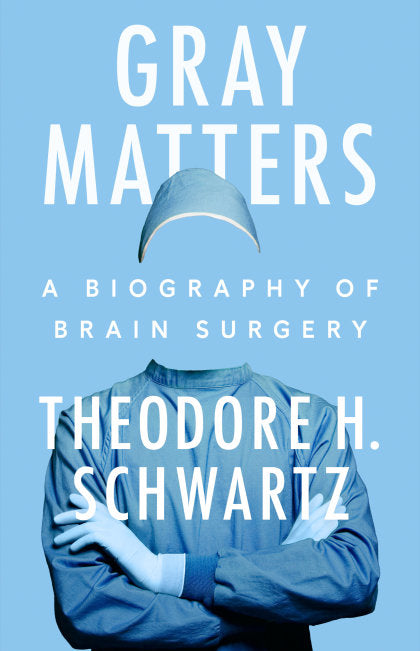
Gray Matters
Gray Matters
Couldn't load pickup availability
Collapsible content
ABOUT
“If you are at all curious about the brain or the surgeons who operate on it, Gray Matters is a must read and Dr. Theodore Schwartz is the perfect guide, a master brain surgeon and superbly talented writer. I have not read a better biography of our shared profession, and in Schwartz's talented hands, the most enigmatic 3 1/2 pounds of tissue in the known universe comes to light in remarkable and revelatory ways.”
—Dr. Sanjay Gupta, CNN Chief Medical Correspondent, and New York Times and #1 Wall Street Journal bestselling author of Keep Sharp: Build a Better Brain at Any Age
A popular biography of brain surgery, by one of its preeminent practitioners
We’ve all heard the phrase “it’s not brain surgery.” But what exactly is brain surgery? It’s a profession that is barely a hundred years old and profoundly connects two human beings, but few know how it works, or its history. How did early neurosurgeons come to understand the human brain—an extraordinarily complex organ that controls everything we do, and yet at only three pounds is so fragile? And how did this incredibly challenging and lifesaving specialty emerge?
In this warm, rigorous, and deeply insightful book, Dr. Theodore H. Schwartz explores what it’s like to hold the scalpel, wield the drill, extract a tumor, fix a bullet hole, and remove a blood clot—when every second can mean life or death. Drawing from the author’s own cases, plus media, sports, and government archives, this seminal work delves into all the brain-related topics that have long-consumed public curiosity, like what really happened to JFK, President Biden’s brain surgery, and the NFL’s management of CTE. Dr. Schwartz also surveys the field’s latest incredible advances and discusses the philosophical questions of the unity of the self and the existence of free will.
A neurosurgeon as well as a professor of neurosurgery at Weill Cornell Medicine, one of the busiest and most highly ranked neurosurgery centers in the world, Dr. Schwartz tells this story like no one else could. Told through anecdote and clear explanation, this is the ultimate cultural and scientific history of a literally mind-blowing human endeavor, one that cuts to the core of who we are.
STANDARD, PRIMARY, DM AND VARIANT COVERS
Standard and Primary covers are widely available through general retailers. They often have higher print runs and can be cheaper, especially during sales.
In contrast, Direct Market (DM) and variant covers are primarily sold in comic shops. DM editions tend to have more limited availability and may be more valuable to collectors.
The main differences lie in artwork style, availability, price, and collector appeal. Ultimately, the choice between standard and variant covers depends on personal preference, budget, and individual collecting goals.
PRODUCT TYPES
Comic book enthusiasts have various formats to choose from when collecting their favorite stories.
Here's a brief overview of the main types:
Omnibus
- Large, hardcover collections
- Usually contain complete runs or extensive story arcs
- Typically 800-1000+ pages
- Higher price point, often €100-€150
Oversized Hardcover (OHC)
- Similar dimensions to omnibus, but thinner
- Collect shorter runs or story arcs
- Usually 300-600 pages
- Priced between €30-€50
Hardcover (HC)
- Standard-sized hardcover books
- Collect 6-12 issues typically
- Similar dimensions to single issues, but with a hard cover
- Priced around €25-€35
Trade Paperback (TP)
- Softcover collections
- Standard comic book size
- Usually collect 4-6 issues
- Most affordable option, typically €15-€25
Other Formats
- Absolute Editions: Oversized, deluxe hardcovers (mainly DC Comics)
- Compendiums: Massive paperback collections
- Graphic Novels (OGN/GN): Original stories not previously released as single issues
The choice between these formats often depends on personal preference, budget, and collecting goals. Omnibus and OHC editions offer larger artwork and more content but at a higher price, while TPs provide a more affordable way to collect complete story arcs