

Penguin Publishing Group
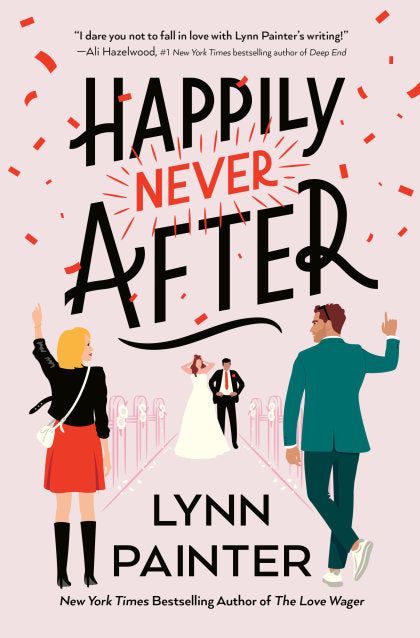
Happily Never After
Happily Never After
Couldn't load pickup availability
Collapsible content
ABOUT
Their job? To break off weddings as hired.
Their dilemma? They might just be in love with each other.
When Sophie Steinbeck finds out just before her nuptials that her fiancé has cheated yet again, she desperately wants to call it off. But because her future father-in-law is her dad’s cutthroat boss, she doesn’t want to be the one to do it. Her savior comes in the form of a professional objector, whose purpose is to show up at weddings and proclaim the words no couple (usually) wants to hear at their ceremony: “I object!”
During anti-wedding festivities that night, Sophie learns more about Max the Objector’s job. It makes perfect sense to her: he saves people from wasting their lives, from hurting each other. He’s a modern-day hero. And Sophie wants in.
The two love cynics start working together, going from wedding to wedding, and Sophie’s having more fun than she’s had in ages. She looks forward to every nerve-racking ceremony saving the lovesick souls of the betrothed masses. As Sophie and Max spend more time together, however, they realize that their physical chemistry is off the charts, leading them to dabble in a little hookup session or two—but it’s totally fine, because they definitely do not have feelings for each other. Love doesn’t exist, after all.
And then everything changes. A groom-to-be hires Sophie to object, but his fiancée is the woman who broke Max’s heart. As Max wrestles with whether he can be a party to his ex’s getting hurt, Sophie grapples with the sudden realization that she may have fallen hard for her partner in crime.
STANDARD, PRIMARY, DM AND VARIANT COVERS
Standard and Primary covers are widely available through general retailers. They often have higher print runs and can be cheaper, especially during sales.
In contrast, Direct Market (DM) and variant covers are primarily sold in comic shops. DM editions tend to have more limited availability and may be more valuable to collectors.
The main differences lie in artwork style, availability, price, and collector appeal. Ultimately, the choice between standard and variant covers depends on personal preference, budget, and individual collecting goals.
PRODUCT TYPES
Comic book enthusiasts have various formats to choose from when collecting their favorite stories.
Here's a brief overview of the main types:
Omnibus
- Large, hardcover collections
- Usually contain complete runs or extensive story arcs
- Typically 800-1000+ pages
- Higher price point, often €100-€150
Oversized Hardcover (OHC)
- Similar dimensions to omnibus, but thinner
- Collect shorter runs or story arcs
- Usually 300-600 pages
- Priced between €30-€50
Hardcover (HC)
- Standard-sized hardcover books
- Collect 6-12 issues typically
- Similar dimensions to single issues, but with a hard cover
- Priced around €25-€35
Trade Paperback (TP)
- Softcover collections
- Standard comic book size
- Usually collect 4-6 issues
- Most affordable option, typically €15-€25
Other Formats
- Absolute Editions: Oversized, deluxe hardcovers (mainly DC Comics)
- Compendiums: Massive paperback collections
- Graphic Novels (OGN/GN): Original stories not previously released as single issues
The choice between these formats often depends on personal preference, budget, and collecting goals. Omnibus and OHC editions offer larger artwork and more content but at a higher price, while TPs provide a more affordable way to collect complete story arcs