

Penguin Publishing Group
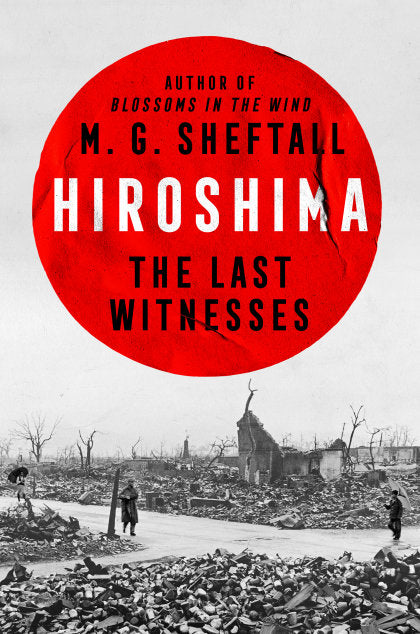
Hiroshima
Hiroshima
Couldn't load pickup availability
Collapsible content
ABOUT
The first volume in a two-book series about each of the atomic bomb drops that ended the Pacific War based on years of irreplicable personal interviews with survivors to tell a story of devastation and resilience
In this vividly rendered historical narrative, M. G. Sheftall layers the stories of hibakusha—the Japanese word for atomic bomb survivors—in harrowing detail, to give a minute-by-minute report of August 6, 1945, in the leadup and aftermath of the world-changing bombing mission of Paul Tibbets, Enola Gay, and Little Boy. These survivors and witnesses, who now have an average age over ninety years old, are quite literally the last people who can still provide us with reliable and detailed testimony about life in their cities before the bombings, tell us what they experienced on the day those cities were obliterated, and give us some appreciation of what it has entailed to live with those memories and scars during the subsequent seventy-plus years.
Sheftall has spent years personally interviewing survivors who lived well into the twenty-first century, allowing him to construct portraits of what Hiroshima was like before the bomb, and how catastrophically its citizens’ lives changed in the seconds, minutes, days, weeks, months, and years afterward. He stands out among historians due to his fluency in spoken and written Japanese, and his longtime immersion in Japanese society that has allowed him, a white American, the unheard-of access to these atomic bomb survivors in the waning years of their lives. Their trust in him is evident in the personal and traumatic depths they open up for him as he records their stories.
Hiroshima should be required reading for the modern age. The personal accounts it contains will serve as cautionary tales about the horror and insanity of nuclear warfare, reminding them—it is hoped—that the world still lives with this danger at our doorstep.
STANDARD, PRIMARY, DM AND VARIANT COVERS
Standard and Primary covers are widely available through general retailers. They often have higher print runs and can be cheaper, especially during sales.
In contrast, Direct Market (DM) and variant covers are primarily sold in comic shops. DM editions tend to have more limited availability and may be more valuable to collectors.
The main differences lie in artwork style, availability, price, and collector appeal. Ultimately, the choice between standard and variant covers depends on personal preference, budget, and individual collecting goals.
PRODUCT TYPES
Comic book enthusiasts have various formats to choose from when collecting their favorite stories.
Here's a brief overview of the main types:
Omnibus
- Large, hardcover collections
- Usually contain complete runs or extensive story arcs
- Typically 800-1000+ pages
- Higher price point, often €100-€150
Oversized Hardcover (OHC)
- Similar dimensions to omnibus, but thinner
- Collect shorter runs or story arcs
- Usually 300-600 pages
- Priced between €30-€50
Hardcover (HC)
- Standard-sized hardcover books
- Collect 6-12 issues typically
- Similar dimensions to single issues, but with a hard cover
- Priced around €25-€35
Trade Paperback (TP)
- Softcover collections
- Standard comic book size
- Usually collect 4-6 issues
- Most affordable option, typically €15-€25
Other Formats
- Absolute Editions: Oversized, deluxe hardcovers (mainly DC Comics)
- Compendiums: Massive paperback collections
- Graphic Novels (OGN/GN): Original stories not previously released as single issues
The choice between these formats often depends on personal preference, budget, and collecting goals. Omnibus and OHC editions offer larger artwork and more content but at a higher price, while TPs provide a more affordable way to collect complete story arcs