

Crown
Hit 'Em Where It Hurts
Hit 'Em Where It Hurts
Couldn't load pickup availability
Collapsible content
ABOUT
“Bitecofer hits hard against the GOP tactics of fear and anger and the Democrats’ status quo narratives around political engagement and winning elections.”—Michael Steele, former RNC chair
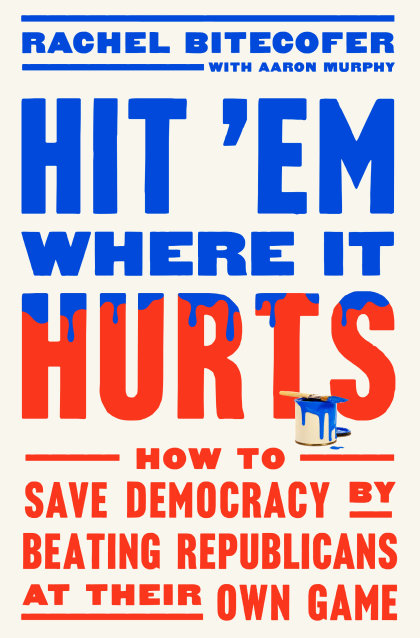
Why do Democrats fail to win voters to their side, and what can they do to develop new winning political strategies—especially as the very fate of democracy hangs in the balance in 2024? Too often the carefully constructed, rational arguments of the Left meet a grisly fate at the polls, where voters are instead swayed by Republican candidates hawking anger, fear, and resentment. Only when Democrats are handed an overwhelming motivational issue—like the Supreme Court’s 2022 Dobbs decision overturning Roe v. Wade—have they found a way to counter this effect.
Political scientist and strategist Rachel Bitecofer came to prominence after predicting the size (to the seat) of the Democrats’ rare Blue Wave in the 2018 midterms. At the heart of her prediction lay a powerful concept—negative partisanship, or the idea that voters, even most so-called independents, don’t vote for their candidate so much as they vote against their candidate’s opponent. Seen through this lens, Hit ’Em Where It Hurts is a deep dive into the Republicans’ own playbook, sharing how Democrats can turn the Right’s own tactics against them. The way for Democrats to wage—and win—electoral war, Bitecofer writes, is to present themselves as “brand ambassadors for freedom, health, wealth, safety, and common sense,” the very opposite of the extremist, freedom-fearing Right. This is a last-ditch effort to armor democracy while there is still time to save and strengthen it against hijacking by a small minority of ideologues.
As America careens into the election cycle that will determine its democratic future, Hit ’Em Where It Hurts is the book for any Democrat who has ever banged their head against a wall when obvious reasoning failed to sway voters over to their side. This guide is a lifeline to save American democracy in its darkest hour.
STANDARD, PRIMARY, DM AND VARIANT COVERS
Standard and Primary covers are widely available through general retailers. They often have higher print runs and can be cheaper, especially during sales.
In contrast, Direct Market (DM) and variant covers are primarily sold in comic shops. DM editions tend to have more limited availability and may be more valuable to collectors.
The main differences lie in artwork style, availability, price, and collector appeal. Ultimately, the choice between standard and variant covers depends on personal preference, budget, and individual collecting goals.
PRODUCT TYPES
Comic book enthusiasts have various formats to choose from when collecting their favorite stories.
Here's a brief overview of the main types:
Omnibus
- Large, hardcover collections
- Usually contain complete runs or extensive story arcs
- Typically 800-1000+ pages
- Higher price point, often €100-€150
Oversized Hardcover (OHC)
- Similar dimensions to omnibus, but thinner
- Collect shorter runs or story arcs
- Usually 300-600 pages
- Priced between €30-€50
Hardcover (HC)
- Standard-sized hardcover books
- Collect 6-12 issues typically
- Similar dimensions to single issues, but with a hard cover
- Priced around €25-€35
Trade Paperback (TP)
- Softcover collections
- Standard comic book size
- Usually collect 4-6 issues
- Most affordable option, typically €15-€25
Other Formats
- Absolute Editions: Oversized, deluxe hardcovers (mainly DC Comics)
- Compendiums: Massive paperback collections
- Graphic Novels (OGN/GN): Original stories not previously released as single issues
The choice between these formats often depends on personal preference, budget, and collecting goals. Omnibus and OHC editions offer larger artwork and more content but at a higher price, while TPs provide a more affordable way to collect complete story arcs